ASEAN is a first-rank FMCG manufacturing region: Thailand is a global hub for food processing and personal care, Malaysia for halal-certified products and palm-oil-based goods, Vietnam for beverages and snacks at scale, Indonesia for home and personal care serving its 270-million domestic market. For first-world importers, private-label owners, and distributors, the region offers quality, certification depth, and cost — provided you manage regulation, shelf life, and brand protection properly. This guide shows how.
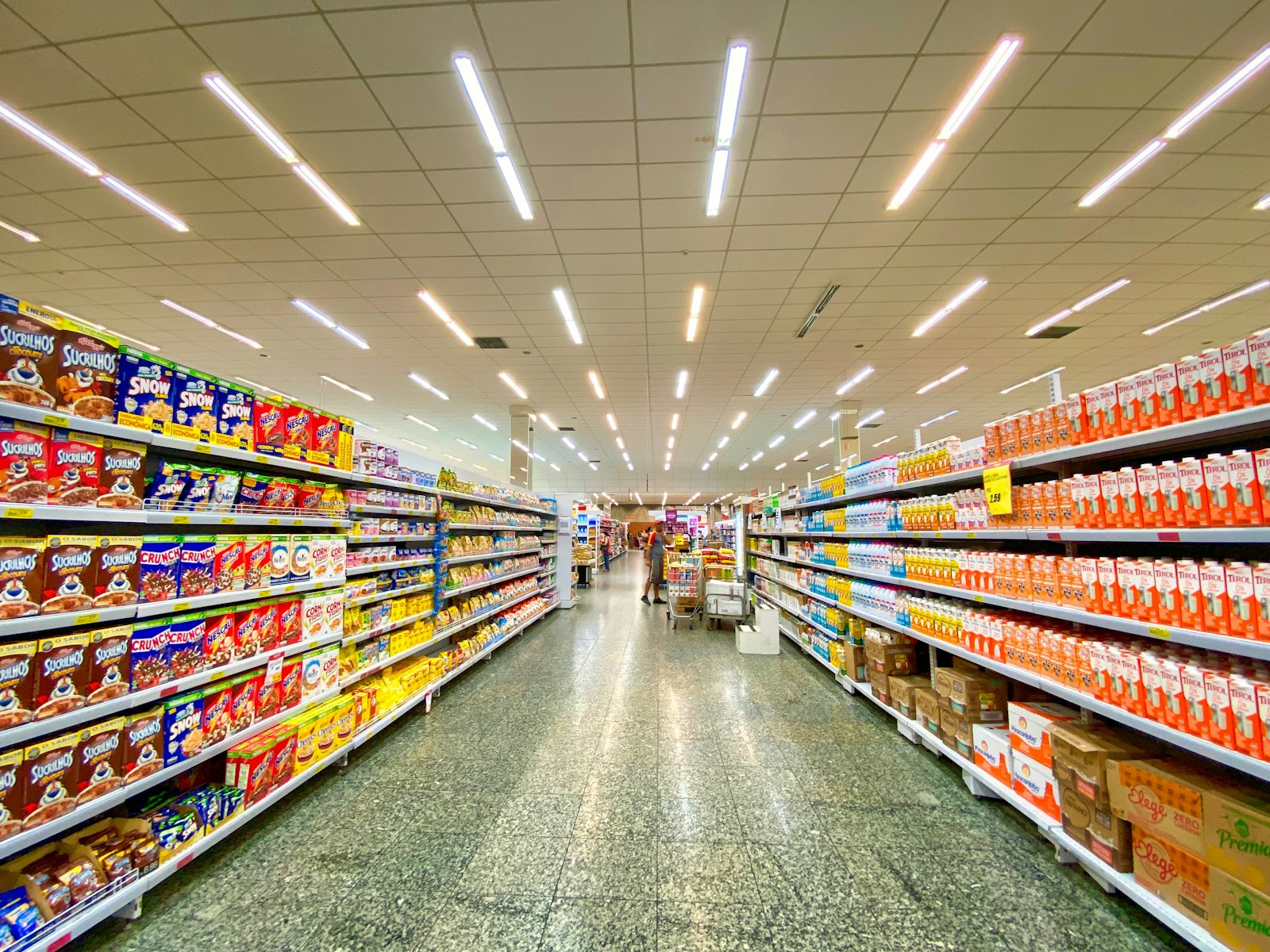
Illustrative image for context only. It does not depict any TUSKO client, brand, product, or factory. TUSKO protects all client and supplier details under NDA.
Where in ASEAN Should You Source FMCG & Consumer Products from ASEAN?
ASEAN is not one factory market. Each country has a different cost base, supplier depth, and export infrastructure for industrial components. The right choice depends on your volume, specification tolerance, and destination market.
Thailand
Strengths: Deep base of Japanese- and European-invested machining and fabrication shops, strong quality culture, English-speaking engineering staff, and well-developed logistics via Laem Chabang port. Particularly strong for OEM-grade components with tight documentation requirements.
Key Advantage: Best fit for buyers who need certified material traceability, third-party inspection access, and consistent repeat-order quality rather than the absolute lowest price.
Vietnam
Strengths: Rapidly expanding metalworking and mechanical-components sector around Hanoi, Hai Phong, and Ho Chi Minh City, with competitive labour costs and growing export experience to the US and EU. Strong in cast, forged, and machined parts at medium-to-high volume.
Key Advantage: Cost-competitive alternative to China for standard specifications, with improving heat-treatment and testing infrastructure.
Malaysia
Strengths: Long-established precision-engineering sector serving oil & gas, electronics, and semiconductor industries. Good process control, strong English proficiency, and familiarity with API, ASTM, and BS standards.
Key Advantage: Strong option for higher-specification components where process documentation and material certification matter more than unit price.
Indonesia
Strengths: Large domestic industrial base, abundant raw materials (nickel, steel, rubber), and competitive pricing on heavier, less tolerance-critical items. Growing export orientation in Java-based fabrication clusters.
Key Advantage: Attractive for bulky, weight-driven products where raw-material proximity lowers the landed cost.
How FMCG & Consumer Products from ASEAN Are Manufactured in ASEAN
ASEAN FMCG production spans the full range: Thai food processors running retort, aseptic, and frozen lines for global retail brands; Malaysian and Indonesian personal-care and home-care plants with halal-certified production; Vietnamese beverage and snack factories with modern high-speed filling. Private-label production follows a standard rhythm: formulation and stability confirmation, packaging and label development against destination rules, trial batch, then production with per-batch COA and retention samples. The region's advantage is the combination of agricultural raw materials (tropical fruit, coconut, palm, rice, coffee), established export factories, and certification depth — but the differentiator between a smooth program and a recall is label compliance and batch documentation, which is where disciplined sourcing pays for itself.
Key Specifications to Lock Before You Request Quotes
FMCG sourcing fails on details that industrial buyers never think about. Lock these before quoting:
| Specification | Common Options | Why It Matters |
|---|---|---|
| Category & formulation | Personal care, home care, food & beverage, supplements, pet food | Each category has its own regulator, testing regime, and factory licensing in both origin and destination |
| Certifications | GMP, HACCP, ISO 22000, BRCGS, halal, organic, FDA facility registration | Retailers and regulators demand them; verify certificate scope covers your product and site |
| Shelf life & dating | 12–36 months; production and best-before coding format | Sea freight eats 1–2 months; you need ≥75% remaining shelf life at arrival for most retailers |
| Packaging & labelling | Destination-language labels, INCI lists (cosmetics), nutrition panels, barcode, recycling marks | Labelling is destination-regulated and the most common reason imported FMCG is held or rejected |
| MOQ structure | Per SKU, per flavour/variant, per production run | FMCG MOQs are per variant — a 10-SKU range can multiply minimums fast |
| Brand & IP | Private label with your trademark, contract manufacturing, exclusivity terms | Register your trademark in the production country and destination before first production |
5 Quality-Control Mistakes Buyers Make with FMCG & Consumer Products from ASEAN
Mistake 1: Treating labelling as an afterthought
⚠️ Risk: A container of personal-care products arrives with labels missing the responsible-person address and INCI formatting the EU requires — relabelling costs more than the margin.
✅ The Fix: Have labels reviewed against destination rules (EU cosmetics regulation, FDA food labelling, UK requirements) before printing, and approve a physical pre-production sample.
Mistake 2: Ignoring shelf-life math
⚠️ Risk: Production plus ocean freight plus customs consumes four months of a 12-month shelf life, and retailers refuse the stock.
✅ The Fix: Model the timeline backwards from the required remaining shelf life at delivery, and choose production-to-ship windows accordingly.
Mistake 3: Verifying the factory but not the formula
⚠️ Risk: The factory is certified, but the actual formulation contains a preservative restricted in the EU, or an allergen declared incorrectly.
✅ The Fix: Review the full ingredient list against destination regulations before ordering, and require a product specification sheet and COA per batch.
Mistake 4: Accepting certificate logos without scope checks
⚠️ Risk: The factory's BRCGS certificate covers a different site or product category than yours.
✅ The Fix: Check every certificate's scope, site address, and expiry against your product, and verify on the certifying body's public register.
Mistake 5: Skipping trademark registration in the production country
⚠️ Risk: A third party registers your brand in the production country and you face a dispute when you try to export or switch factories.
✅ The Fix: Register your trademark in the ASEAN production country and destination markets before first production — it is cheap insurance.
Landed Cost: What Drives the Final Price
The ex-works price is only part of the story. For industrial components shipped from ASEAN to first-world markets, the landed cost typically breaks down as follows:
| Cost Element | Typical Share of Landed Cost | How to Control It |
|---|---|---|
| Ex-works product price | 55–70% | Lock specifications before quoting; compare like-for-like quotes only; commit to realistic volumes for tiered pricing |
| Tooling & first-article approval | 0–8% (first order) | Amortise tooling across the program, not the first container; approve first articles fast to avoid re-runs |
| Inspection & testing | 1–3% | Bundle third-party or partner-led inspection into the program instead of per-shipment arrangements |
| Ocean freight & insurance | 8–20% | Maximise container utilisation, consolidate SKUs, and book FCL rather than LCL wherever possible |
| Duties & destination charges | 0–25% (market-dependent) | Confirm HS classification and any preferential tariff via certificate of origin before fixing your sell price |
| Quality failures & delays | The hidden variable | A single rejected container costs more than a year of inspections — invest in prevention, not claims |
Buyers who manage these elements systematically typically land ASEAN industrial components 20–40% below equivalent Western sourcing, even after freight, duty, and inspection costs.
Destination-Market Compliance: What to Check Before Shipping
FMCG is the most regulation-dense category in this library: foods need destination-compliant labelling, additive, and allergen rules (FDA, EU FIC 1169/2011, UK, FSANZ); cosmetics need EU 1223/2009 CPNP notification with a responsible person, or US MoCRA facility registration and listing; supplements and pet food have their own regimes. Origin-side, factories should hold GMP/HACCP/ISO 22000 as relevant, with export health or free-sale certificates where required. Shelf-life dating, language, and recycling/EPR marks (EU packaging rules, UK EPR) are importer obligations. Always verify the factory's export licence and product-specific registrations before the first order.
From Enquiry to First Container: The Process That Works
A disciplined sourcing process prevents almost every failure mode described in this guide:
- Specification pack. You provide drawings, standards, target volumes, and destination market. We convert this into a supplier-ready specification in the factory's working language.
- Supplier shortlist. We identify 3–5 candidate factories per country, screen them on capability, certifications, export history, and financial stability, and recommend the best two.
- Sampling & first article. Pre-production samples or first articles are produced and verified against the specification — dimensionally, materially, and functionally — before any mass production is authorised.
- Production with in-line checks. During the production run, in-line inspections catch drift early, while there is still time to correct it without delaying shipment.
- Pre-shipment inspection & loading supervision. A final random inspection against AQL criteria, packaging verification, and container-loading supervision close the loop before the goods leave ASEAN.
- Documentation & repeat orders. Certificates, test reports, and origin documents are compiled for your customs broker, and the approved specification becomes the baseline for repeat orders.
Frequently Asked Questions
Which ASEAN country is best for my FMCG category?
Thailand: processed food, beverages, personal care, pet food — the deepest FMCG export infrastructure. Malaysia: halal-certified products, palm-oil derivatives, chocolate and confectionery. Vietnam: coffee, snacks, beverages at very competitive cost. Indonesia: home and personal care, with scale economics from its huge domestic market.
What MOQs are realistic for private-label FMCG?
Varies by category: personal care typically 5,000–10,000 units per SKU; food and beverage often one production batch (which can be 20,000+ units); some factories offer trial runs at higher unit cost. Consolidating several SKUs into one container is standard.
How do I handle product registration in destination markets?
Cosmetics need CPNP notification (EU) or equivalent; foods need compliance with labelling and additive rules; supplements face stricter regimes. Your importer-of-record or a regulatory consultant handles this — TUSKO coordinates the factory-side documentation (COA, specs, free-sale certificates) they need.
How is quality controlled per batch?
Certificate of Analysis per production batch (microbiology, key actives, physical parameters), retention samples, and pre-shipment inspection of packaging, coding, and labelling. For first orders, we recommend a production-run inspection as well.
What about halal, organic, or vegan certification?
Malaysia and Indonesia are global halal hubs (JAKIM, BPJPH certification). Thai and Vietnamese factories hold organic (EU, USDA) and vegan certifications for many categories. Verify the certificate covers your exact product and production site.
Can TUSKO manage a multi-SKU private-label program?
Yes — this is a core part of our work: factory selection, formulation and label coordination, production scheduling across SKUs, inspection, and consolidated export documentation, all through one point of contact.
How TUSKO Helps You Source FMCG & Consumer Products from ASEAN from ASEAN
TUSKO is a Bangkok-based sourcing and trade partner covering Thailand, Vietnam, Malaysia, and Indonesia. We act as your single point of contact: supplier identification, factory audits, sampling, in-line and pre-shipment inspection, consolidation, and export documentation. Our fees are built into the landed cost we quote — there is no separate retainer or commission — and the percentage decreases as your order volume grows.
Send us your drawing, specification sheet, or even a photo of the part you currently buy. We reply within 12–24 hours with initial feedback on manufacturability, likely country fit, and indicative pricing.
- Email: hello@tuskoconsulting.com
- WhatsApp Business: @tuskoconsulting
We reply within 12–24 hours, every day.
Sources and Scope
This guide reflects TUSKO's sourcing experience across ASEAN industrial suppliers, publicly available standards documentation (ASME, EN, ISO, ASTM, JIS), and destination-market import regulations current at the time of writing. Standards and tariffs change; confirm the revision in force before placing orders. This article is general information, not engineering or legal advice for a specific application.