Shaft couplings look simple and fail expensively. A mis-machined bore, an under-cured elastomer element, or a missing dynamic balance can take down a pump train or a conveyor line. ASEAN produces a wide range of jaw, gear, disc, grid, and elastomeric couplings at attractive prices — this guide explains how first-world buyers can capture that value without inheriting the quality risk.
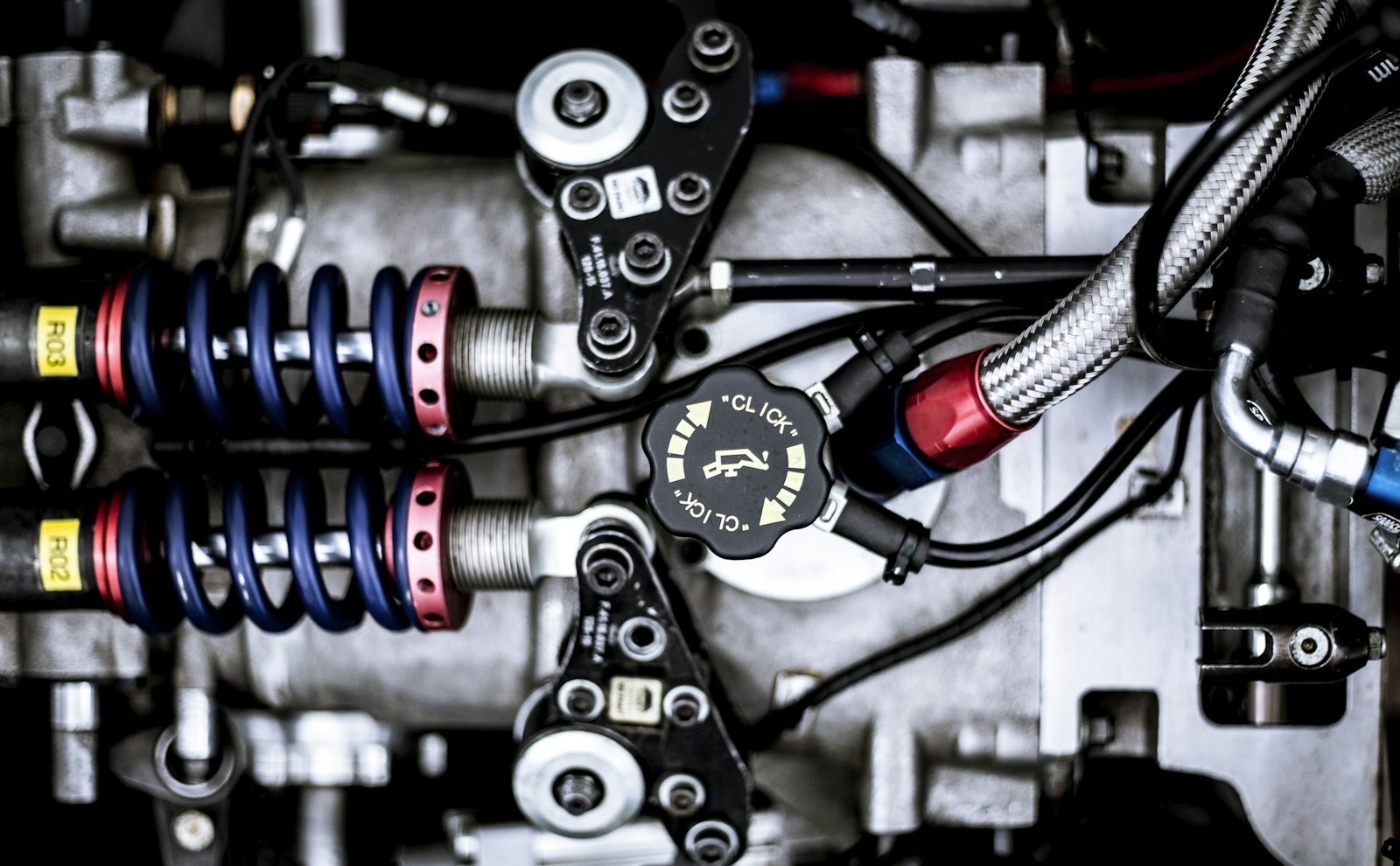
Illustrative image for context only. It does not depict any TUSKO client, brand, product, or factory. TUSKO protects all client and supplier details under NDA.
Where in ASEAN Should You Source Industrial Shaft Couplings from ASEAN?
ASEAN is not one factory market. Each country has a different cost base, supplier depth, and export infrastructure for industrial components. The right choice depends on your volume, specification tolerance, and destination market.
Thailand
Strengths: Deep base of Japanese- and European-invested machining and fabrication shops, strong quality culture, English-speaking engineering staff, and well-developed logistics via Laem Chabang port. Particularly strong for OEM-grade components with tight documentation requirements.
Key Advantage: Best fit for buyers who need certified material traceability, third-party inspection access, and consistent repeat-order quality rather than the absolute lowest price.
Vietnam
Strengths: Rapidly expanding metalworking and mechanical-components sector around Hanoi, Hai Phong, and Ho Chi Minh City, with competitive labour costs and growing export experience to the US and EU. Strong in cast, forged, and machined parts at medium-to-high volume.
Key Advantage: Cost-competitive alternative to China for standard specifications, with improving heat-treatment and testing infrastructure.
Malaysia
Strengths: Long-established precision-engineering sector serving oil & gas, electronics, and semiconductor industries. Good process control, strong English proficiency, and familiarity with API, ASTM, and BS standards.
Key Advantage: Strong option for higher-specification components where process documentation and material certification matter more than unit price.
Indonesia
Strengths: Large domestic industrial base, abundant raw materials (nickel, steel, rubber), and competitive pricing on heavier, less tolerance-critical items. Growing export orientation in Java-based fabrication clusters.
Key Advantage: Attractive for bulky, weight-driven products where raw-material proximity lowers the landed cost.
How Industrial Shaft Couplings from ASEAN Are Manufactured in ASEAN
Coupling hubs and flanges are machined from bar, forging, or ductile-iron castings on CNC lathes and machining centres; keyways are broached or wire-cut, and gear couplings are hobbed or shaped. Elastomer elements are compression- or injection-moulded from compounded NBR, polyurethane, or Hytrel, then cured and post-cured to stabilise hardness. Disc packs are laser-cut from stainless spring steel and riveted or bolted into cartridge assemblies. High-speed assemblies are dynamically balanced on balancing machines to the specified ISO 21940 grade. The strongest ASEAN suppliers combine machining, moulding, and balancing under one roof, with CMM verification of bores and documented hardness testing of every elastomer batch.
Key Specifications to Lock Before You Request Quotes
Coupling suppliers quote to very different assumptions. Fix these parameters before comparing prices:
| Specification | Common Options | Why It Matters |
|---|---|---|
| Coupling type | Jaw (spider), gear, disc pack, grid, tyre, Oldham, rigid | Each handles misalignment, torque, and shock differently — type follows the application, not the price |
| Rated & peak torque | Nm, with service factor per AGMA or manufacturer tables | Undersizing causes element fatigue; the service factor must reflect the driver and driven machine |
| Bore & keyway | Metric/imperial bores, H7 tolerance, DIN 6885 / BS 4235 keyways | Bore tolerance and keyway fit determine whether the coupling frets or runs true |
| Max speed & balancing | Balanced to ISO 21940 (G6.3 / G2.5) for high-speed service | Unbalanced hubs above ~3,600 rpm cause vibration and bearing damage |
| Elastomer material | NBR, polyurethane, Hytrel, EPDM — hardness in Shore A | Temperature range, chemical exposure, and torsional stiffness all depend on the element compound |
| Material & treatment | EN8/C45 steel, ductile iron, aluminium; phosphate or zinc finish | Corrosion protection for sea freight and humid plant environments |
5 Quality-Control Mistakes Buyers Make with Industrial Shaft Couplings from ASEAN
Mistake 1: Specifying torque without a service factor
⚠️ Risk: A coupling sized to nominal motor torque fails within months on a crusher drive with heavy shock loading.
✅ The Fix: Calculate the required torque using the application service factor (AGMA 9004 or the coupling maker's table) and put the resulting rated torque on the PO.
Mistake 2: Leaving bore tolerance to the supplier's default
⚠️ Risk: Bores arrive oversized; the coupling slips on the shaft and frets the keyway, destroying both shaft and hub.
✅ The Fix: Specify bore tolerance class (typically H7) and keyway standard on the drawing, and verify with plug gauges during pre-shipment inspection.
Mistake 3: Ignoring elastomer compound and cure
⚠️ Risk: Spider elements harden and crack within a year because the compound was never specified and the cure was rushed.
✅ The Fix: Name the elastomer material and Shore hardness, require the supplier's compound datasheet, and batch-test elements for hardness (±5 Shore A) at inspection.
Mistake 4: Skipping balance requirements on high-speed couplings
⚠️ Risk: A disc-pack coupling on a 6,000 rpm compressor vibrates badly despite perfect alignment.
✅ The Fix: State the balancing grade (e.g., ISO 21940 G2.5) for anything above roughly 3,600 rpm and request the balance report per assembly.
Mistake 5: No corrosion protection specified
⚠️ Risk: Steel hubs arrive surface-rusted after ocean transit and are rejected by the distributor's customers.
✅ The Fix: Specify phosphate-and-oil, zinc plating, or paint; require VCI wrapping and desiccant for sea freight.
Landed Cost: What Drives the Final Price
The ex-works price is only part of the story. For industrial components shipped from ASEAN to first-world markets, the landed cost typically breaks down as follows:
| Cost Element | Typical Share of Landed Cost | How to Control It |
|---|---|---|
| Ex-works product price | 55–70% | Lock specifications before quoting; compare like-for-like quotes only; commit to realistic volumes for tiered pricing |
| Tooling & first-article approval | 0–8% (first order) | Amortise tooling across the program, not the first container; approve first articles fast to avoid re-runs |
| Inspection & testing | 1–3% | Bundle third-party or partner-led inspection into the program instead of per-shipment arrangements |
| Ocean freight & insurance | 8–20% | Maximise container utilisation, consolidate SKUs, and book FCL rather than LCL wherever possible |
| Duties & destination charges | 0–25% (market-dependent) | Confirm HS classification and any preferential tariff via certificate of origin before fixing your sell price |
| Quality failures & delays | The hidden variable | A single rejected container costs more than a year of inspections — invest in prevention, not claims |
Buyers who manage these elements systematically typically land ASEAN industrial components 20–40% below equivalent Western sourcing, even after freight, duty, and inspection costs.
Destination-Market Compliance: What to Check Before Shipping
Couplings are machinery components: in the EU they generally fall under the Machinery Regulation (EU) 2023/1230 supply chain as components rather than standalone CE-marked machines, but couplings sold as safety components or with ATEX-rated requirements for explosive atmospheres carry additional obligations — verify per application. Elastomer compounds should be checked against EU REACH and US TSCA restricted-substance expectations. Standard HS classification is typically 8483.60; US Section 301/232 measures may affect Chinese-origin content, which ASEAN origin can legitimately avoid when substantial transformation occurs in the ASEAN factory — confirm rules of origin documentation with your customs broker.
From Enquiry to First Container: The Process That Works
A disciplined sourcing process prevents almost every failure mode described in this guide:
- Specification pack. You provide drawings, standards, target volumes, and destination market. We convert this into a supplier-ready specification in the factory's working language.
- Supplier shortlist. We identify 3–5 candidate factories per country, screen them on capability, certifications, export history, and financial stability, and recommend the best two.
- Sampling & first article. Pre-production samples or first articles are produced and verified against the specification — dimensionally, materially, and functionally — before any mass production is authorised.
- Production with in-line checks. During the production run, in-line inspections catch drift early, while there is still time to correct it without delaying shipment.
- Pre-shipment inspection & loading supervision. A final random inspection against AQL criteria, packaging verification, and container-loading supervision close the loop before the goods leave ASEAN.
- Documentation & repeat orders. Certificates, test reports, and origin documents are compiled for your customs broker, and the approved specification becomes the baseline for repeat orders.
Frequently Asked Questions
Can ASEAN factories produce couplings interchangeable with major brands?
Yes — many produce dimensionally interchangeable jaw and gear couplings (e.g., to common L/RC/GE series dimensions). Note that brand names and trademarked designs must not be referenced on product or packaging; specify dimensions, not brand part numbers.
What MOQs are typical for machined couplings?
Machined steel couplings typically start at 200–500 pieces per size; cast hubs (ductile iron) usually need 1,000+ pieces to justify tooling. Elastomer elements can often be added at low MOQ once moulds exist.
How do I verify bore and keyway accuracy remotely?
Require a dimensional report per batch (bore micrometer or air-gauge readings, keyway width with go/no-go gauges), and have the pre-shipment inspector re-measure a random sample against the drawing.
Are elastomer elements better sourced with the hubs or separately?
Usually together — the element geometry is matched to the hub. But for spares programs, elements alone can be sourced at low cost; provide a sample or drawing of the existing element.
What lead time should I plan for?
First orders with new tooling: 60–90 days. Repeat orders: 45–60 days production plus 3–5 weeks ocean freight to the US or Europe.
Can TUSKO manage a mixed coupling program across sizes?
Yes. Consolidating many sizes from one or two vetted factories into mixed containers is a standard part of our sourcing programs, with inspection and documentation handled as one shipment.
How TUSKO Helps You Source Industrial Shaft Couplings from ASEAN from ASEAN
TUSKO is a Bangkok-based sourcing and trade partner covering Thailand, Vietnam, Malaysia, and Indonesia. We act as your single point of contact: supplier identification, factory audits, sampling, in-line and pre-shipment inspection, consolidation, and export documentation. Our fees are built into the landed cost we quote — there is no separate retainer or commission — and the percentage decreases as your order volume grows.
Send us your drawing, specification sheet, or even a photo of the part you currently buy. We reply within 12–24 hours with initial feedback on manufacturability, likely country fit, and indicative pricing.
- Email: hello@tuskoconsulting.com
- WhatsApp Business: @tuskoconsulting
We reply within 12–24 hours, every day.
Sources and Scope
This guide reflects TUSKO's sourcing experience across ASEAN industrial suppliers, publicly available standards documentation (ASME, EN, ISO, ASTM, JIS), and destination-market import regulations current at the time of writing. Standards and tariffs change; confirm the revision in force before placing orders. This article is general information, not engineering or legal advice for a specific application.