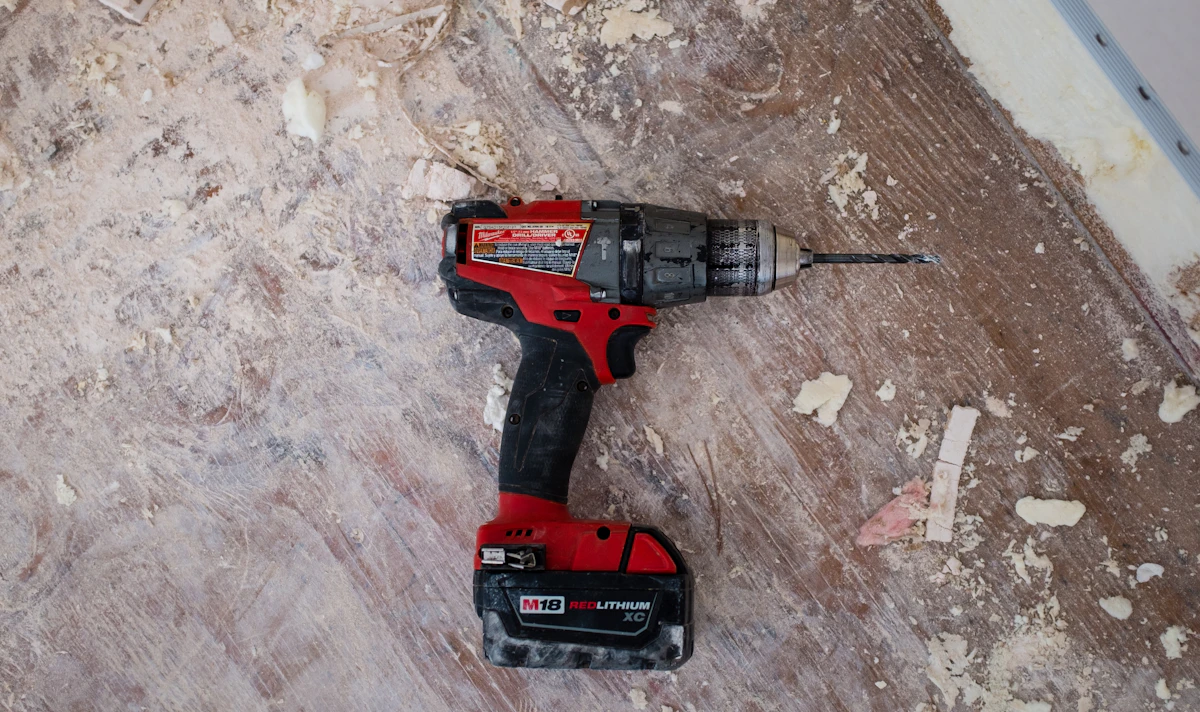
Power Tools & Accessories from ASEAN: OEM Manufacturing and Import Guide 2026
ASEAN has become a serious China+1 base for corded and cordless power tools: drills, angle grinders, sanders, impact drivers, garden power tools and accessories. Thailand, Vietnam and Malaysia host assembly plants with local motor winding, plastic injection and battery-pack capability, several already running OEM lines for Western DIY and professional brands.
This guide covers what to specify, the certifications that matter, realistic MOQs, and how to control quality when manufacturing and importing from ASEAN.
Why ASEAN for power tools
- Tariff exposure: many Chinese power tools carry 25% US Section 301 duties; ASEAN-made equivalents typically enter at standard MFN rates.
- Existing export base: regional plants assemble for global tool brands and big-box private labels, so safety-certification workflows are familiar.
- Battery supply chain: Li-ion pack assembly is established in Vietnam and Malaysia, with cells sourced from Korean, Japanese and Chinese cell makers.
Specifications to lock before quoting
- Motor and performance: brushed vs brushless, rated power, no-load speed, torque; request dyno test reports per batch.
- Battery platform: cell brand and grade, BMS functions (over-charge, over-discharge, temperature), UN 38.3 test reports for transport.
- Safety and EMC standards: IEC 62841 / EN 62841 for the EU, UL 62841 for the US; agree the exact test standard before tooling.
- Durability targets: switch cycles, drop tests, ingress protection (IP rating), expected duty cycle.
- Accessories and packaging: charger plug variants, case vs carton, retail-ready artwork, manuals in destination languages.
Compliance for Western markets
- US: UL or ETL listing expected by retailers; FCC for electronic controls; California Prop 65 labelling.
- EU/UK: CE/UKCA under the Machinery Regulation and EMC Directive; LVD for chargers; RoHS and REACH apply.
- Australia: RCM marking with electrical safety certification; batteries shipped under UN 38.3 and IATA rules.
MOQ, tooling and landed cost
- Typical MOQ: 500–1,500 units per SKU for housings and colours; accessory kits can start lower.
- Injection moulds for housings: USD 8,000–40,000 depending on cavity count and overmoulding, usually amortised at volume.
- Landed-cost savings vs current China sourcing: typically 8–18% for US buyers after duty, narrower for the EU.
QC gates that prevent the common failures
- Pre-production: approve golden samples with full test report (safety, EMC, endurance).
- During production: motor performance sampling, battery pack functional tests, torque calibration checks.
- Pre-shipment: AQL 2.5 inspection with hi-pot, function, drop and charge-cycle tests on finished packed units.
Next step
Send us a reference product or drawing, target price and annual volume. We return a landed-cost quotation with specification, certification plan, lead time and inspection schedule.
WhatsApp Business @tuskoconsulting or email contact@tuskoconsulting.com — we reply within 12-24 hours.
FAQ
Can ASEAN factories produce brushless tools? Yes. Brushless motor assembly and controller production exist in Vietnam and Thailand, though high-end controller ICs are still imported.
Do factories handle certification? Export-oriented plants manage UL/ETL, CE and RCM projects with accredited labs; expect 8–16 weeks and budget for test fees.
What about batteries and shipping restrictions? Factories prepare UN 38.3 reports and MSDS; freight forwarders book Li-ion cargo under IATA/IMDG rules.
What is a realistic first-order timeline? 14–20 weeks including certification and golden-sample approval; repeat orders run 8–10 weeks.