Steel drums and IBC tanks are a classic high-volume, freight-sensitive category: the product is cheap, the container space is expensive, and a leak-test failure rate of even 1% can wipe out the margin. ASEAN — especially Thailand and Malaysia — has a mature drum and IBC industry serving chemical, food, and lubricant exporters. This guide covers what first-world buyers need to specify and verify.
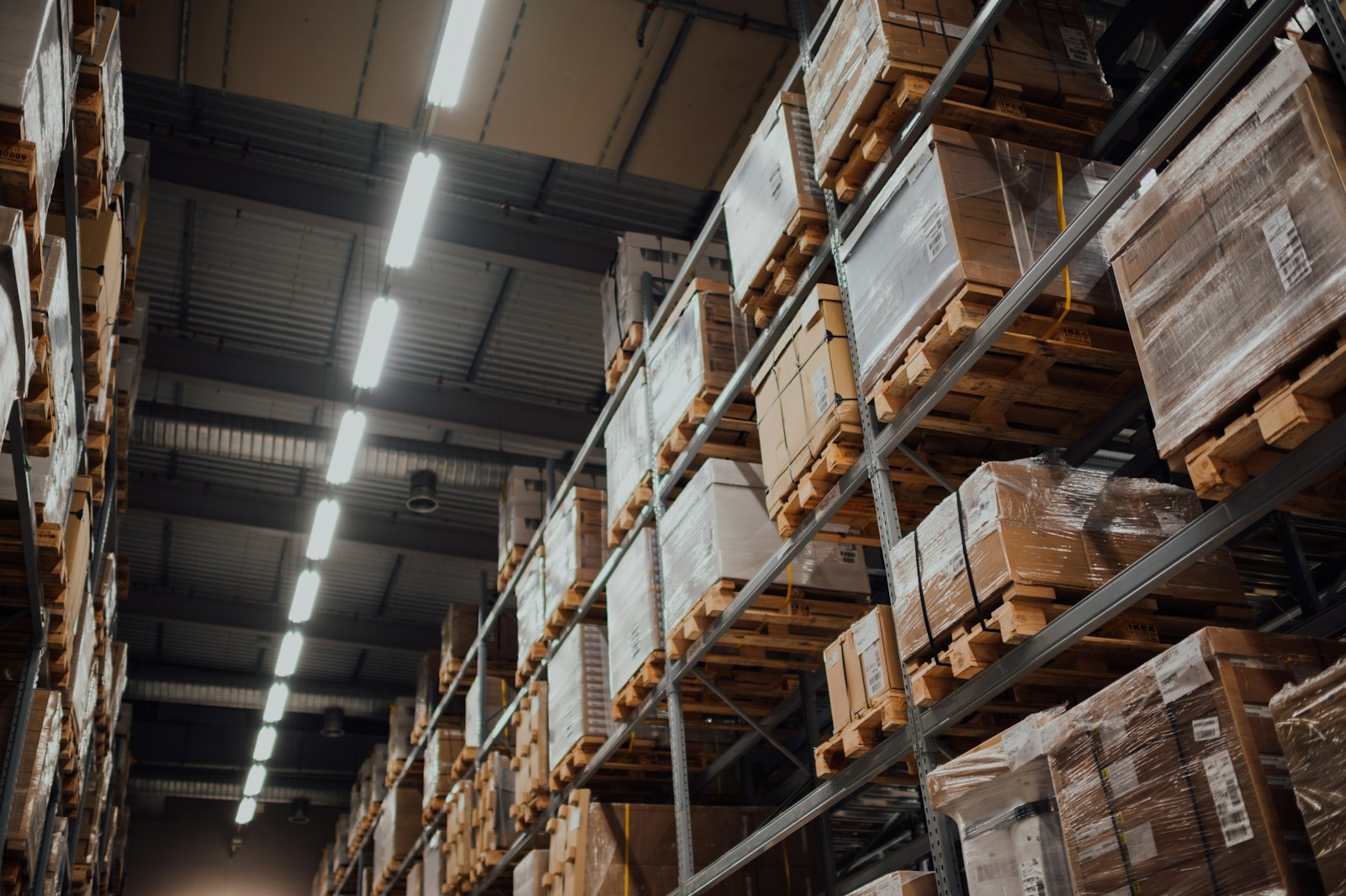
Illustrative image for context only. It does not depict any TUSKO client, brand, product, or factory. TUSKO protects all client and supplier details under NDA.
Where in ASEAN Should You Source Steel Drums & IBC Tanks from ASEAN?
ASEAN is not one factory market. Each country has a different cost base, supplier depth, and export infrastructure for industrial components. The right choice depends on your volume, specification tolerance, and destination market.
Thailand
Strengths: Deep base of Japanese- and European-invested machining and fabrication shops, strong quality culture, English-speaking engineering staff, and well-developed logistics via Laem Chabang port. Particularly strong for OEM-grade components with tight documentation requirements.
Key Advantage: Best fit for buyers who need certified material traceability, third-party inspection access, and consistent repeat-order quality rather than the absolute lowest price.
Vietnam
Strengths: Rapidly expanding metalworking and mechanical-components sector around Hanoi, Hai Phong, and Ho Chi Minh City, with competitive labour costs and growing export experience to the US and EU. Strong in cast, forged, and machined parts at medium-to-high volume.
Key Advantage: Cost-competitive alternative to China for standard specifications, with improving heat-treatment and testing infrastructure.
Malaysia
Strengths: Long-established precision-engineering sector serving oil & gas, electronics, and semiconductor industries. Good process control, strong English proficiency, and familiarity with API, ASTM, and BS standards.
Key Advantage: Strong option for higher-specification components where process documentation and material certification matter more than unit price.
Indonesia
Strengths: Large domestic industrial base, abundant raw materials (nickel, steel, rubber), and competitive pricing on heavier, less tolerance-critical items. Growing export orientation in Java-based fabrication clusters.
Key Advantage: Attractive for bulky, weight-driven products where raw-material proximity lowers the landed cost.
How Steel Drums & IBC Tanks from ASEAN Are Manufactured in ASEAN
Steel drum production is a high-speed forming operation: cold-rolled steel coil is cut, rolled into bodies, resistance-welded along the seam, flanged, and beaded; ends are pressed, seamed onto the body with double or triple seams, and bungs are fitted. Drums then pass through 100% leak testing before external painting and internal lining (sprayed and baked epoxy-phenolic or food-grade lacquer). IBC production combines blow-moulded HDPE inner bottles, galvanised steel cage welding, and pallet-base assembly. UN-rated production runs under a certified design type, with periodic re-qualification tests — drop, stack, leakproofness, and hydraulic pressure — witnessed by accredited laboratories.
Key Specifications to Lock Before You Request Quotes
Drum and IBC pricing is driven by steel thickness, certification level, and coating. Lock these before quoting:
| Specification | Common Options | Why It Matters |
|---|---|---|
| Container type | Tight-head drum, open-head drum, composite IBC (31HA1), steel IBC (31A) | Tight-head for liquids, open-head for solids and viscous products; IBCs for 1,000 L logistics efficiency |
| UN rating | e.g., UN 1A1/X1.8/300 for dangerous goods; non-UN for general use | legally required for hazardous-goods transport; the rating dictates steel gauge and testing |
| Steel gauge | 0.8–1.2 mm body; combined thickness rules for UN ratings | Thin steel dents in handling; gauge must match the UN performance level |
| Internal lining | Unlined, epoxy-phenolic, food-grade lacquer | Product compatibility — the wrong lining contaminates or is stripped by the contents |
| Closure system | 2" and 3/4" bungs, lever-lock or bolt-ring lids, gaskets (EPDM, Viton) | Gasket material must be compatible with contents; bung threads must accept standard fittings |
| IBC cage & pallet | Galvanised grid cage, steel/wood/plastic pallet base | Stacking strength and forklift handling depend on cage weld quality and pallet design |
5 Quality-Control Mistakes Buyers Make with Steel Drums & IBC Tanks from ASEAN
Mistake 1: Buying UN-marked drums without verifying the test reports
⚠️ Risk: Drums carry a UN mark, but the underlying design-qualification test reports do not exist or belong to another factory — a serious liability if a dangerous-goods incident occurs.
✅ The Fix: Require the UN design-type test certificate and periodic re-test records from an accredited lab, and confirm the factory is authorised to apply the mark.
Mistake 2: Under-specifying steel gauge to hit a price
⚠️ Risk: Drums dent in transit, stack-collapse in the warehouse, and customers reject them.
✅ The Fix: Specify body and end gauges explicitly (e.g., 1.0/1.0/1.0 mm) and verify with ultrasonic thickness checks during inspection.
Mistake 3: Ignoring lining compatibility
⚠️ Risk: An epoxy-phenolic lining blisters when filled with a solvent-based product, contaminating the contents.
✅ The Fix: Give the supplier your product's chemical name and concentration, and require a lining compatibility statement from the coating supplier.
Mistake 4: Skipping leak testing on the first production lot
⚠️ Risk: A welding or seaming defect affects a whole batch; discovered only when the customer's filling line leaks.
✅ The Fix: Require 100% in-line leak testing (air-pressure decay or helium) at the factory, plus a witnessed sample test at pre-shipment inspection.
Mistake 5: Not planning for the freight math
⚠️ Risk: Drums are freight-dominated: a poorly planned spec ships mostly air and destroys the landed-cost advantage.
✅ The Fix: Model units per 40'HC early (≈80–96 drums per pallet position depending on size), consider nested/conical designs or IBC knock-down options, and let the freight cost drive the sourcing decision.
Landed Cost: What Drives the Final Price
The ex-works price is only part of the story. For industrial components shipped from ASEAN to first-world markets, the landed cost typically breaks down as follows:
| Cost Element | Typical Share of Landed Cost | How to Control It |
|---|---|---|
| Ex-works product price | 55–70% | Lock specifications before quoting; compare like-for-like quotes only; commit to realistic volumes for tiered pricing |
| Tooling & first-article approval | 0–8% (first order) | Amortise tooling across the program, not the first container; approve first articles fast to avoid re-runs |
| Inspection & testing | 1–3% | Bundle third-party or partner-led inspection into the program instead of per-shipment arrangements |
| Ocean freight & insurance | 8–20% | Maximise container utilisation, consolidate SKUs, and book FCL rather than LCL wherever possible |
| Duties & destination charges | 0–25% (market-dependent) | Confirm HS classification and any preferential tariff via certificate of origin before fixing your sell price |
| Quality failures & delays | The hidden variable | A single rejected container costs more than a year of inspections — invest in prevention, not claims |
Buyers who manage these elements systematically typically land ASEAN industrial components 20–40% below equivalent Western sourcing, even after freight, duty, and inspection costs.
Destination-Market Compliance: What to Check Before Shipping
Transport of dangerous goods packaging is regulated everywhere: UN Model Regulations flow into US 49 CFR, EU ADR, and IMDG sea-freight rules — the drum's UN mark must be backed by real design-type testing. Food-contact linings need FDA 21 CFR or EU 10/2011 supporting declarations. Empty drums and IBCs are generally low-tariff items (HS 7310.10 / 3923.30 for plastic inner receptacles), but check steel-related trade measures for your destination. Note that used or reconditioned containers face additional rules in some markets.
From Enquiry to First Container: The Process That Works
A disciplined sourcing process prevents almost every failure mode described in this guide:
- Specification pack. You provide drawings, standards, target volumes, and destination market. We convert this into a supplier-ready specification in the factory's working language.
- Supplier shortlist. We identify 3–5 candidate factories per country, screen them on capability, certifications, export history, and financial stability, and recommend the best two.
- Sampling & first article. Pre-production samples or first articles are produced and verified against the specification — dimensionally, materially, and functionally — before any mass production is authorised.
- Production with in-line checks. During the production run, in-line inspections catch drift early, while there is still time to correct it without delaying shipment.
- Pre-shipment inspection & loading supervision. A final random inspection against AQL criteria, packaging verification, and container-loading supervision close the loop before the goods leave ASEAN.
- Documentation & repeat orders. Certificates, test reports, and origin documents are compiled for your customs broker, and the approved specification becomes the baseline for repeat orders.
Frequently Asked Questions
What UN rating do I need for hazardous liquids?
It depends on the packing group of your product: X-rated drums cover Packing Groups I–III, Y covers II–III, Z covers III only. Your dangerous-goods advisor determines the required rating; the drum supplier must then supply certification matching it.
Can ASEAN factories supply food-grade drums?
Yes — several Thai and Malaysian producers offer food-grade internal lacquers and can support FDA 21 CFR 175.300 or EU 10/2011 compliance documentation for the coating. Verify the coating supplier's declarations, not just the drum maker's claim.
What is the MOQ for custom-printed drums?
Screen or litho printing typically starts at 1,000–3,000 drums per design. Plain drums with stencil marking can go lower.
Are reconditioned or remanufactured IBCs available?
Yes, a reconditioning industry exists in Thailand and Malaysia, but for export to first-world markets new units with full documentation are usually the safer choice; reconditioned units face acceptance limits in some jurisdictions.
How are IBCs tested before shipment?
Standard production tests include leak-proofness (air under water or pressure decay), plus design-type tests for lift, stack, drop, and topple per UN 31HA1/31A requirements. Ask for the production batch test records.
Can TUSKO consolidate drums with other cargo?
Yes — drums and IBCs are often combined with other industrial goods in mixed containers to improve freight economics, which we plan and supervise at the consolidation warehouse.
How TUSKO Helps You Source Steel Drums & IBC Tanks from ASEAN from ASEAN
TUSKO is a Bangkok-based sourcing and trade partner covering Thailand, Vietnam, Malaysia, and Indonesia. We act as your single point of contact: supplier identification, factory audits, sampling, in-line and pre-shipment inspection, consolidation, and export documentation. Our fees are built into the landed cost we quote — there is no separate retainer or commission — and the percentage decreases as your order volume grows.
Send us your drawing, specification sheet, or even a photo of the part you currently buy. We reply within 12–24 hours with initial feedback on manufacturability, likely country fit, and indicative pricing.
- Email: hello@tuskoconsulting.com
- WhatsApp Business: @tuskoconsulting
We reply within 12–24 hours, every day.
Sources and Scope
This guide reflects TUSKO's sourcing experience across ASEAN industrial suppliers, publicly available standards documentation (ASME, EN, ISO, ASTM, JIS), and destination-market import regulations current at the time of writing. Standards and tariffs change; confirm the revision in force before placing orders. This article is general information, not engineering or legal advice for a specific application.