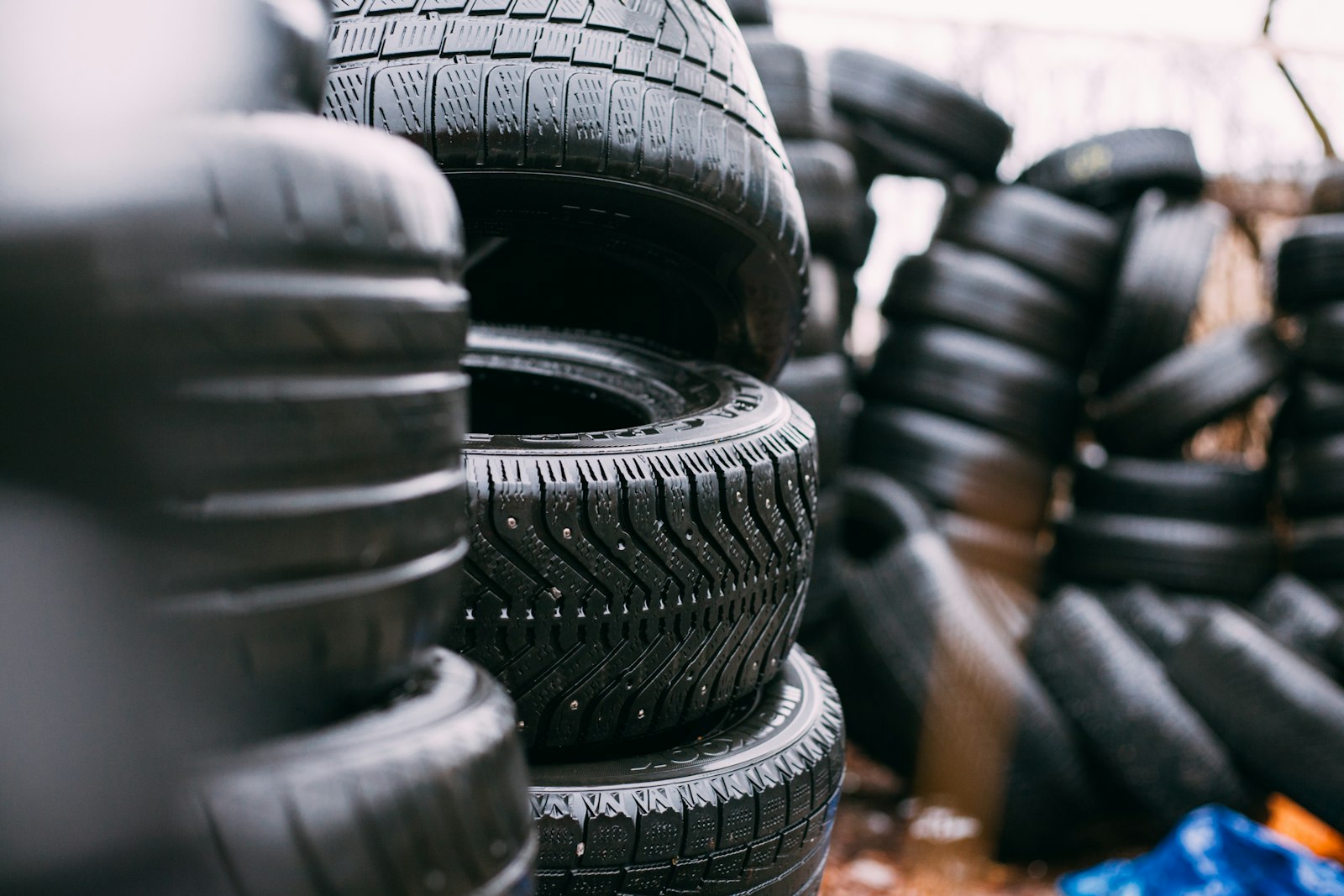
ASEAN is one of the world's great tyre-producing regions: Thailand alone is a top-three global exporter of truck and bus radial (TBR) tyres, fed by the region's natural rubber plantations and decades of Japanese, American, and Chinese tyre-plant investment. For distributors and fleet suppliers in first-world markets, the opportunity is real — but so are the risks around casings, compounds, and certification. This guide covers how to source TBR tyres from ASEAN properly.
Illustrative image for context only. It does not depict any TUSKO client, brand, product, or factory. TUSKO protects all client and supplier details under NDA.
Where in ASEAN Should You Source Truck & Bus Tyres (TBR) from ASEAN?
ASEAN is not one factory market. Each country has a different cost base, supplier depth, and export infrastructure for industrial components. The right choice depends on your volume, specification tolerance, and destination market.
Thailand
Strengths: Deep base of Japanese- and European-invested machining and fabrication shops, strong quality culture, English-speaking engineering staff, and well-developed logistics via Laem Chabang port. Particularly strong for OEM-grade components with tight documentation requirements.
Key Advantage: Best fit for buyers who need certified material traceability, third-party inspection access, and consistent repeat-order quality rather than the absolute lowest price.
Vietnam
Strengths: Rapidly expanding metalworking and mechanical-components sector around Hanoi, Hai Phong, and Ho Chi Minh City, with competitive labour costs and growing export experience to the US and EU. Strong in cast, forged, and machined parts at medium-to-high volume.
Key Advantage: Cost-competitive alternative to China for standard specifications, with improving heat-treatment and testing infrastructure.
Malaysia
Strengths: Long-established precision-engineering sector serving oil & gas, electronics, and semiconductor industries. Good process control, strong English proficiency, and familiarity with API, ASTM, and BS standards.
Key Advantage: Strong option for higher-specification components where process documentation and material certification matter more than unit price.
Indonesia
Strengths: Large domestic industrial base, abundant raw materials (nickel, steel, rubber), and competitive pricing on heavier, less tolerance-critical items. Growing export orientation in Java-based fabrication clusters.
Key Advantage: Attractive for bulky, weight-driven products where raw-material proximity lowers the landed cost.
How Truck & Bus Tyres (TBR) from ASEAN Are Manufactured in ASEAN
TBR production starts with compounding: natural rubber (abundant in Thailand and Indonesia) is mixed with synthetic rubber, carbon black, silica, and chemicals in Banbury mixers. Components are then built up — extruded tread and sidewall, calendered steel cord belts and body plies, bead assemblies — and assembled on tyre-building machines into green tyres. Curing presses vulcanise the tyre in moulds that form the tread pattern and sidewall markings, including the DOT/E-mark codes. Finished tyres pass uniformity, dynamic balance, and X-ray inspection before warehousing. The best ASEAN plants run the same equipment and process controls as their parent companies' home-country factories, with the region's natural-rubber advantage built into the compound cost.
Key Specifications to Lock Before You Request Quotes
Tyre quotes are meaningless without a locked specification. Fix these before requesting prices:
| Specification | Common Options | Why It Matters |
|---|---|---|
| Size & pattern | e.g., 295/80R22.5, 11R22.5, 12R22.5; steer/drive/trailer tread patterns | Pattern must match axle position and duty cycle — long-haul, regional, on/off-road |
| Load & speed rating | e.g., 152/149M, 156/150K; ply rating equivalents | Legal and safety requirement; must match vehicle and market norms |
| Construction | All-steel radial, tubeless vs tube-type | TBR is all-steel radial by default; tube-type still common in some export markets |
| Certification marks | DOT (US), ECE R54/R117 (EU), E-mark, GCC (Gulf), SNI, INMETRO | Each destination market requires its own homologation — no mark, no sale |
| Compound & mileage target | Long-haul compound vs regional; expected km before 6 mm tread | Compound determines mileage, heat resistance, and price — the core value proposition |
| Casing & retreadability | Belt package design, casing warranty terms | Fleet economics depend on retreading; a weak casing destroys the tyre's lifetime value |
5 Quality-Control Mistakes Buyers Make with Truck & Bus Tyres (TBR) from ASEAN
Mistake 1: Buying on price per tyre instead of cost per kilometre
⚠️ Risk: A cheap tyre with a soft, fast-wearing compound costs more per kilometre than a premium casing — and fleets notice within months.
✅ The Fix: Negotiate on verified mileage performance: request fleet test data, warranty terms, and if possible run a controlled fleet trial before committing to volume.
Mistake 2: Ignoring market homologation
⚠️ Risk: A container of tyres without DOT or E-mark is unsellable in the destination market and cannot be returned economically.
✅ The Fix: Confirm the exact certification marks for your market on the tyre sidewall and in the factory's homologation documents before ordering.
Mistake 3: Skipping uniformity and balance testing
⚠️ Risk: Tyres with poor uniformity cause vibration complaints that distributors must absorb as warranty claims.
✅ The Fix: Require the factory's uniformity and dynamic-balance test data per production batch, and include a sample check in pre-shipment inspection.
Mistake 4: Not checking production date codes
⚠️ Risk: Tyres arriving 18+ months after production are effectively aged stock; customers reject them or demand discounts.
✅ The Fix: Specify maximum tyre age at shipment (e.g., ≤6 months from DOT date code) and verify date codes at loading.
Mistake 5: Overlooking casing quality for the retread market
⚠️ Risk: Casings that fail at retread inspection destroy your brand with fleet customers who budget on two or three lives per casing.
✅ The Fix: Evaluate the belt package and casing construction, ask for retreadability data, and agree a casing warranty in writing.
Landed Cost: What Drives the Final Price
The ex-works price is only part of the story. For industrial components shipped from ASEAN to first-world markets, the landed cost typically breaks down as follows:
| Cost Element | Typical Share of Landed Cost | How to Control It |
|---|---|---|
| Ex-works product price | 55–70% | Lock specifications before quoting; compare like-for-like quotes only; commit to realistic volumes for tiered pricing |
| Tooling & first-article approval | 0–8% (first order) | Amortise tooling across the program, not the first container; approve first articles fast to avoid re-runs |
| Inspection & testing | 1–3% | Bundle third-party or partner-led inspection into the program instead of per-shipment arrangements |
| Ocean freight & insurance | 8–20% | Maximise container utilisation, consolidate SKUs, and book FCL rather than LCL wherever possible |
| Duties & destination charges | 0–25% (market-dependent) | Confirm HS classification and any preferential tariff via certificate of origin before fixing your sell price |
| Quality failures & delays | The hidden variable | A single rejected container costs more than a year of inspections — invest in prevention, not claims |
Buyers who manage these elements systematically typically land ASEAN industrial components 20–40% below equivalent Western sourcing, even after freight, duty, and inspection costs.
Destination-Market Compliance: What to Check Before Shipping
Tyres are a regulated safety product in every first-world market: FMVSS 119 and DOT marking in the US, ECE R54/R117 type approval and tyre labelling in the EU and UK, ADR compliance in Australia. Trade-remedy duties (anti-dumping/countervailing) on TBR tyres vary sharply by origin country and producer and change over time — verify the current rates before committing. End-of-life tyre regulations (EPR schemes in the EU and UK) place reporting and fee obligations on the importer. Natural-rubber supply chain due diligence (e.g., GPSNR alignment) is increasingly requested by European fleet customers.
From Enquiry to First Container: The Process That Works
A disciplined sourcing process prevents almost every failure mode described in this guide:
- Specification pack. You provide drawings, standards, target volumes, and destination market. We convert this into a supplier-ready specification in the factory's working language.
- Supplier shortlist. We identify 3–5 candidate factories per country, screen them on capability, certifications, export history, and financial stability, and recommend the best two.
- Sampling & first article. Pre-production samples or first articles are produced and verified against the specification — dimensionally, materially, and functionally — before any mass production is authorised.
- Production with in-line checks. During the production run, in-line inspections catch drift early, while there is still time to correct it without delaying shipment.
- Pre-shipment inspection & loading supervision. A final random inspection against AQL criteria, packaging verification, and container-loading supervision close the loop before the goods leave ASEAN.
- Documentation & repeat orders. Certificates, test reports, and origin documents are compiled for your customs broker, and the approved specification becomes the baseline for repeat orders.
Frequently Asked Questions
Which ASEAN country leads in TBR tyres?
Thailand is the regional leader with the deepest cluster of global-brand and OEM-quality plants. Vietnam has grown rapidly with Chinese- and Korean-invested factories offering competitive pricing. Indonesia has strong capacity fed by domestic natural rubber. Malaysia has smaller but quality-oriented production.
Can ASEAN factories produce private-label TBR tyres?
Yes — private label is a major part of the region's export business. Factories produce to your brand, sidewall design, and specification, subject to MOQs of typically 500–1,000 tyres per size and pattern.
What certifications do I need for the US and EU?
US: DOT marking with FMVSS 119 compliance for TBR. EU: ECE R54 type approval plus R117 requirements (rolling resistance, wet grip, noise) with the relevant labelling. Your importer-of-record obligations differ by market — confirm with your compliance advisor.
How are tyres shipped and how many fit in a container?
Tyres ship loose-loaded or palletised in 40'HC containers — roughly 230–280 TBR tyres per 40'HC depending on size. Loose loading maximises count but requires careful stacking supervision.
What about anti-dumping duties?
TBR tyres are subject to trade-remedy measures in several markets, and rates differ by country of origin and by factory. Verify current AD/CVD status for the specific country and producer with your customs broker before fixing your landed-cost model.
Can TUSKO manage a mixed-size container program?
Yes — mixed-size, mixed-pattern containers are the norm in tyre distribution, and we plan the loading matrix, supervise stuffing, and verify date codes and markings at the factory gate.
How TUSKO Helps You Source Truck & Bus Tyres (TBR) from ASEAN from ASEAN
TUSKO is a Bangkok-based sourcing and trade partner covering Thailand, Vietnam, Malaysia, and Indonesia. We act as your single point of contact: supplier identification, factory audits, sampling, in-line and pre-shipment inspection, consolidation, and export documentation. Our fees are built into the landed cost we quote — there is no separate retainer or commission — and the percentage decreases as your order volume grows.
Send us your drawing, specification sheet, or even a photo of the part you currently buy. We reply within 12–24 hours with initial feedback on manufacturability, likely country fit, and indicative pricing.
- Email: hello@tuskoconsulting.com
- WhatsApp Business: @tuskoconsulting
We reply within 12–24 hours, every day.
Sources and Scope
This guide reflects TUSKO's sourcing experience across ASEAN industrial suppliers, publicly available standards documentation (ASME, EN, ISO, ASTM, JIS), and destination-market import regulations current at the time of writing. Standards and tariffs change; confirm the revision in force before placing orders. This article is general information, not engineering or legal advice for a specific application.