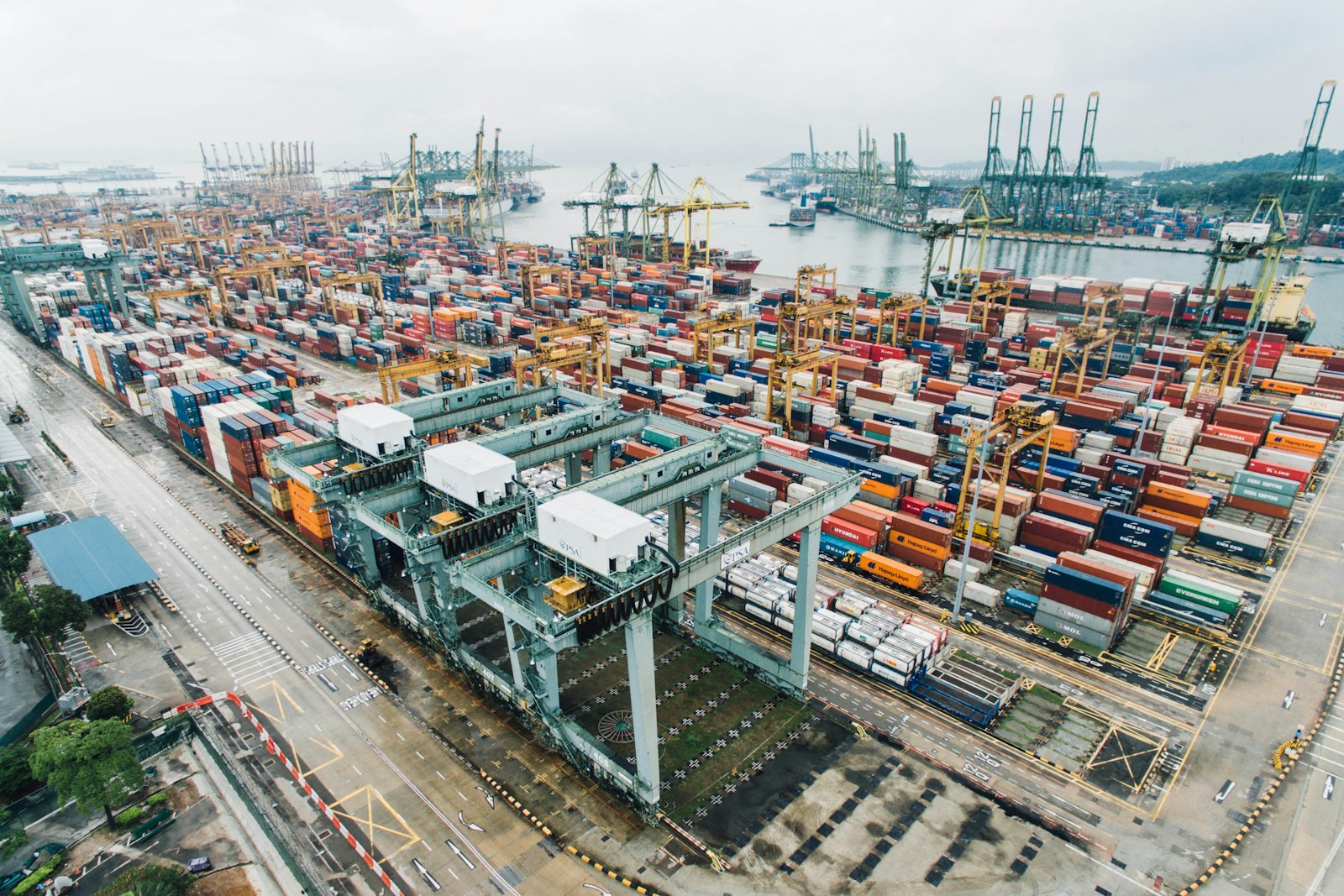
Image disclaimer. This image is for editorial illustration only and is not associated with the actual client, brand, product, or factory referenced in this article. TUSKO protects client confidentiality, and most engagements are covered by NDA.
Export Consulting Thailand: Docs, Duties & FTAs
A 2026 guide to export consulting in Thailand: required documents, customs procedure, Form D / Form E / Form AANZ certificates of origin, BOI duty.
# Export Consulting in Thailand: Documents, Duties, and FTAs Foreign Buyers Should Know
When a shipment leaves Laem Chabang or Suvarnabhumi, the paperwork that travels with it determines whether your goods clear customs in 24 hours or sit in bond for two weeks. **Export consulting in Thailand** exists because the rules are genuinely tricky — but most of the value is captured by getting six documents right and choosing the correct Free Trade Agreement.
This is the briefing TUSKO gives every new foreign buyer.
## The six core export documents
1. **Commercial invoice** — must match the PO and the packing list to the cent.
2. **Packing list** — gross/net weights, dimensions, carton count, marks.
3. **Bill of Lading (B/L) or Air Waybill (AWB)** — issued by the carrier or forwarder.
4. **Certificate of Origin** — issued by the Department of Foreign Trade (DFT) or an authorized Chamber. The *type* of CO (Form D, E, AANZ, AI, AK, AJ, AHK, RCEP, Form A, generic) drives your duty rate at destination.
5. **Export declaration (e-Customs Paperless)** — filed through the Thai Customs paperless system before goods leave the factory.
6. **Product-specific certificates** — Phytosanitary (food, rubber), FDA (cosmetics, supplements), DOA permits, Form Q for organic, CITES for certain materials.
Missing or mismatched values across documents 1–3 is the **#1 reason** for customs holds at destination — not anything exotic.
## Free Trade Agreements that change the math
Thailand is party to 14 active FTAs in 2026. The ones that matter most for foreign buyers:
| Agreement | Coverage | Form |
|---|---|---|
| ATIGA (ASEAN) | Intra-ASEAN | Form D |
| ACFTA | ASEAN–China | Form E |
| AANZFTA | ASEAN–Australia/NZ | Form AANZ |
| AJCEP / JTEPA | ASEAN/Thailand–Japan | Form AJ / JTEPA |
| AKFTA | ASEAN–Korea | Form AK |
| AIFTA | ASEAN–India | Form AI |
| AHKFTA | ASEAN–Hong Kong | Form AHK |
| RCEP | 15 Asia-Pacific countries | Form RCEP |
| TAFTA | Thailand–Australia | TAFTA CO |
| Thai-Peru FTA | Thailand–Peru | TPFTA CO |
The EU, UK, and US have **no FTA** with Thailand, so exports there pay MFN duty unless GSP (where still available) applies. This is exactly why **China-Plus-One via Thailand** works for the right HS codes — see [Section 301 Tariff Workaround Through ASEAN Sourcing](/blog/section-301-tariff-workaround-asean-2026).
## BOI duty and tax privileges
Factories with **Board of Investment (BOI)** promotion can import raw materials and machinery duty-free, claim 3–8 year corporate-tax holidays, and access streamlined work permits for foreign technicians. As a buyer, this matters because:
- BOI factories quote lower because their input costs are lower.
- They are typically newer, better-equipped, and audit-ready.
- They can use the **One-Stop Service Center** to expedite your visit visas.
See: [BOI Thailand Benefits for Foreign Manufacturers (2026 Guide)](/blog/boi-thailand-benefits-foreign-manufacturers-2026).
## Common export consulting mistakes
1. **Wrong HS code on the export declaration.** Thai customs is forgiving; the destination customs is not. Get the HS code agreed with your destination broker *before* the first shipment.
2. **Skipping the Certificate of Origin** because "duty is low anyway". Even 4% on a 40HQ container is real money, and CO costs ~USD 30 to issue.
3. **Self-certification without proper authorization** under the ASEAN-Wide Self-Certification Scheme (AWSC). Only Certified Exporters can do this.
4. **Letting the factory pick the forwarder.** Their freight markup can erase the unit-price savings.
5. **No INCOTERMS in the PO.** "FOB Bangkok" is not an INCOTERM. "FOB Laem Chabang (Incoterms 2020)" is.
## What TUSKO's export consulting includes
- HS-code classification opinion (Thai + destination side).
- FTA eligibility analysis and CO application support.
- Forwarder RFQ and INCOTERM optimization.
- Pre-shipment document review (one human reads every page).
- Destination customs broker introduction.
- Landed-cost modeling — try our [Landed Cost Calculator](/landed-cost-calculator).
Flat-fee per shipment, no retainer. [Talk to our export team](/contact).
---
*TUSKO Consulting — export consulting and ASEAN sourcing from Bangkok. Updated June 2026.*
Frequently Asked Questions
What export documents do I need from a Thai supplier?
Commercial invoice, packing list, bill of lading or air waybill, certificate of origin (often Form D or Form E depending on destination FTA), and product-specific certificates (FDA, CE, RoHS) where applicable.
Which Free Trade Agreements does Thailand have?
Thailand is party to RCEP, ASEAN-China, ASEAN-Korea, ASEAN-India, ASEAN-Australia/New Zealand, ASEAN-Japan, plus bilateral FTAs with Australia, New Zealand, India, Japan, Chile, and Peru. Many goods enter duty-free under the right Form.
How do I claim FTA preferential duty in my country?
Ask the supplier for the correct Certificate of Origin (e.g. Form D for ASEAN, Form AANZ for Australia) and submit it to your customs broker with the shipment documents.
Are there any export restrictions from Thailand?
Restrictions apply to a narrow list — certain agricultural products, antiquities, wildlife, and some chemicals. Mainstream industrial and consumer goods have no export licensing requirement.