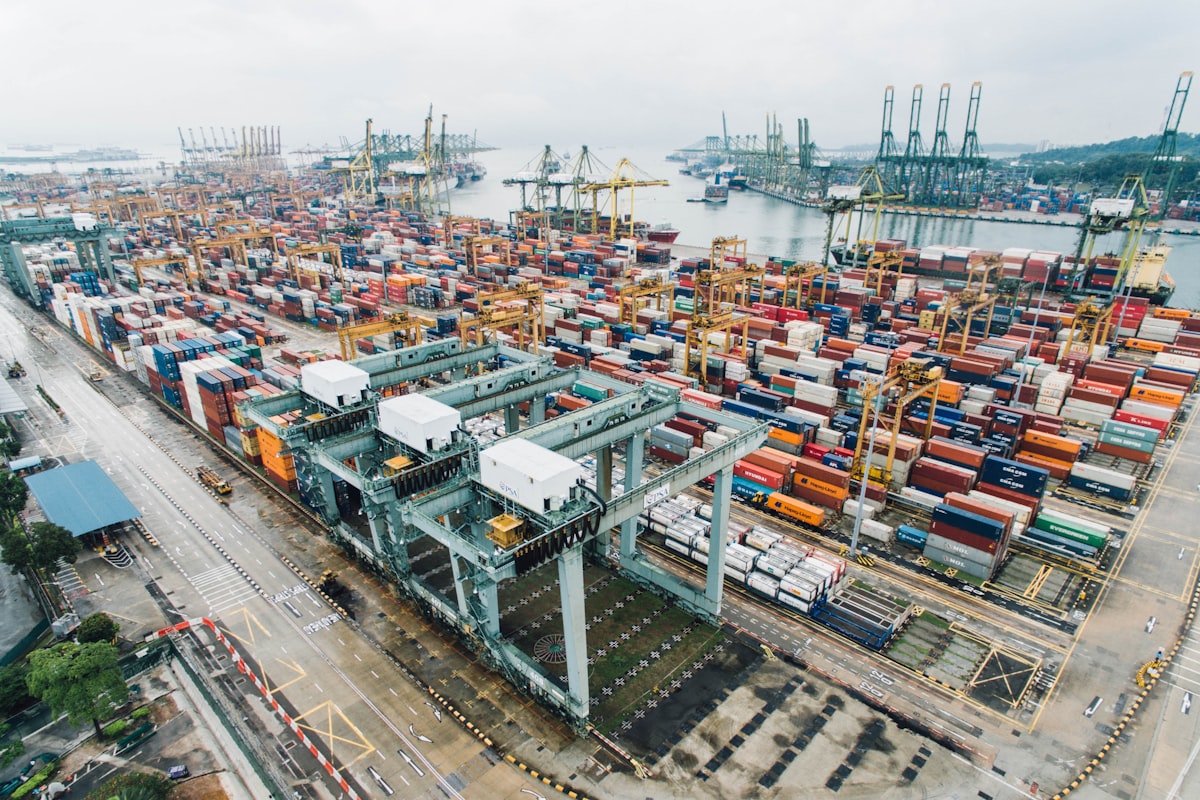
When you import or manufacture from Thailand across several product categories at once, duty stops being a single number. A metal bracket, a plastic housing, a cotton apron and a food supplement in the same container can each land at a different rate — and each has its own origin paperwork.
Why mixed baskets go wrong
- One HS code is copied across the whole invoice because it was "close enough"
- Assembled sets are declared as loose parts (or the reverse)
- Origin certificates are requested for some lines and forgotten on others
- Category-specific agency requirements (food, cosmetics, electrical) are discovered at the border
Classify by category, not by container
| Category | Typical chapter | Common classification trap |
|---|---|---|
| Metal fabrication | 73 / 76 | Finished article vs semi-finished profile |
| Electronics & PCBA | 85 | Populated board vs finished appliance |
| Plastics & housings | 39 | Part of a machine (ch. 84/85) instead of ch. 39 |
| Textiles & apparel | 61 / 62 | Knit vs woven changes the rate |
| Home & kitchen | 69 / 73 / 44 | Material composition decides the heading |
| Food & ingredients | 09 / 20 / 21 | Preparation level and sugar content |
Ask the factory for a full material and construction breakdown per SKU before you classify. For sets, the General Rules of Interpretation decide whether the shipment is one article or several — get that call documented in writing.
Origin: the part most buyers skip
Thai-made goods can qualify for preferential rates under several regional and bilateral agreements, including the Australia–Thailand FTA and ASEAN-linked arrangements. Preference is per line item, not per shipment: each SKU must meet its own rule of origin (change of tariff heading, regional value content, or a specific process rule).
Practical rule: request a Certificate of Origin per invoice line and keep the bill of materials that proves the value content. If a category uses imported sub-components, check the value threshold before you claim preference — an unsupported claim is worse than paying the standard rate.
A working process
- Freeze the SKU list per category with drawings, material specs and photos
- Get a written classification opinion (broker or customs ruling) for anything ambiguous
- Build a duty matrix: SKU, HS code, base rate, preferential rate, origin rule, agency flags
- Price landed cost per SKU, not per container — see the landed cost calculator
- Re-verify the matrix at each engineering change; a material swap can move the heading
Where TUSKO fits
We consolidate the technical data from every factory in the basket, keep one classification and origin file per SKU, and quote you a landed price per line — so the duty position is settled before the goods move, not after. Read the companion pieces on mixed-SKU consolidation and multi-category audits.
FAQ
Can one broker handle all categories? Usually yes, but food, cosmetics and electrical goods trigger extra agency filings — confirm your broker files those routinely.
Does a Thai factory decide my HS code? No. The importer of record is responsible. The factory supplies the facts; you or your broker classify.
Is preferential duty automatic? Never. It requires a valid origin document per line and records you can produce on audit.