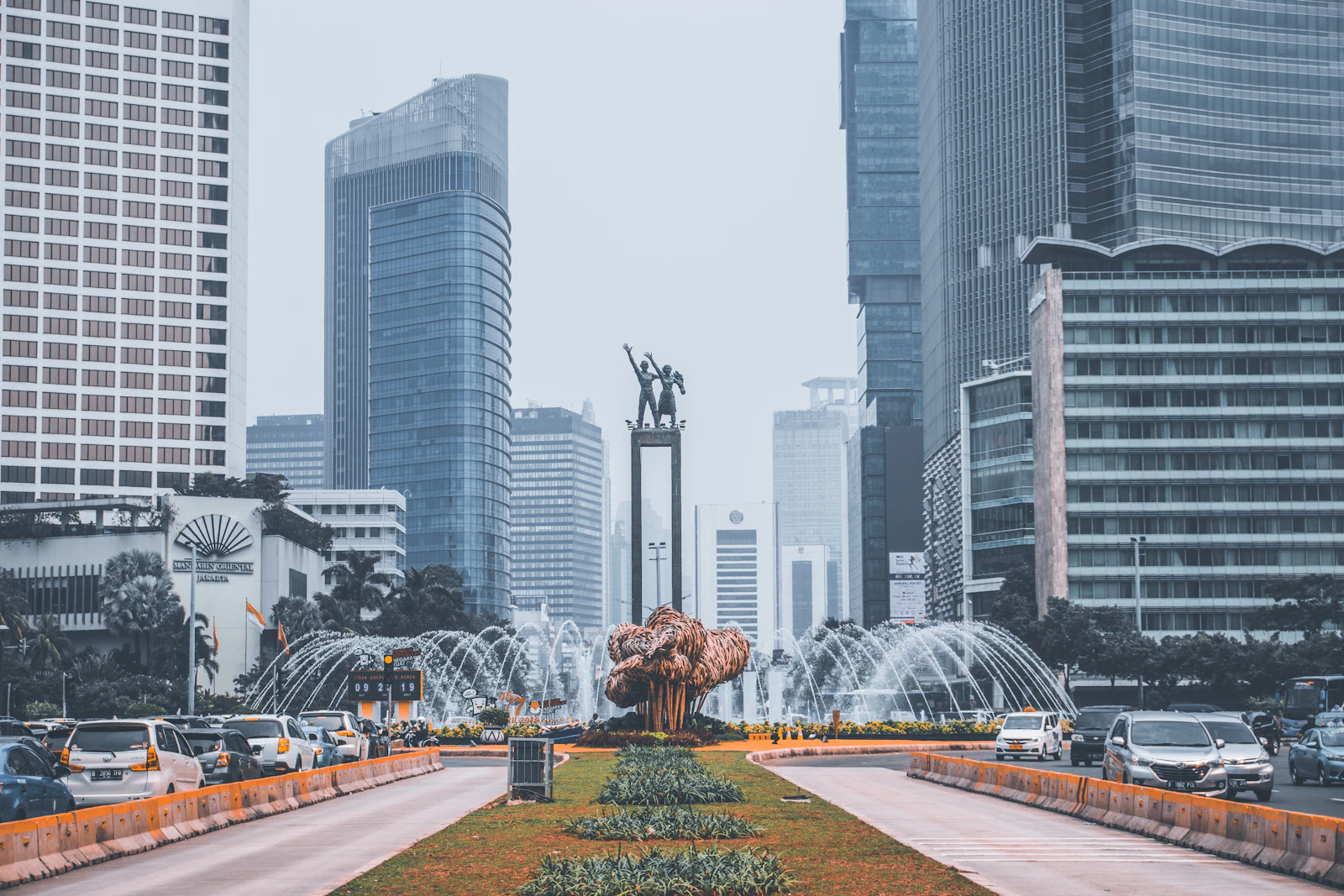
Image disclaimer. This image is for editorial illustration only and is not associated with the actual client, brand, product, or factory referenced in this article. TUSKO protects client confidentiality, and most engagements are covered by NDA.
Indonesia Sourcing 2026: Jakarta & Surabaya
A practical 2026 guide for foreign buyers sourcing from Indonesia — why Jakarta and Surabaya matter, the categories Indonesia wins on, BKPM incentives.
# Indonesia Sourcing 2026: Jakarta, Surabaya & The ASEAN Cost Leader for SME Buyers
Indonesia is the **third leg of the ASEAN sourcing tripod** — and the one most foreign buyers underuse. While Thailand owns automotive and stainless, and Vietnam owns electronics assembly and apparel, Indonesia quietly dominates on **raw-material-heavy categories**: rubber, palm-derivatives, textiles, furniture, footwear, and a growing base of metal fabrication around Surabaya.
For SME buyers in the US, EU, UK, and Australia running [China Plus One](/blog/china-plus-one-thailand-2026-playbook) strategies, Indonesia deserves a seat at the table on the right SKUs.
## Why Indonesia, why now
Three things changed between 2023 and 2026:
1. **EU–Indonesia CEPA** moved into late-stage negotiation, with preferential tariffs on industrial and agricultural goods expected to land in 2026–2027.
2. **BKPM (Indonesia Investment Coordinating Board)** simplified the OSS (Online Single Submission) regime — foreign buyers can now verify a factory's NIB (business identity number) and risk classification in minutes.
3. **Domestic cost discipline tightened**. UMR (regional minimum wage) growth slowed, IDR weakness improved FOB pricing in USD terms, and Tier-2 factories began chasing export buyers harder.
The result: for buyers willing to do the homework, Indonesia FOB prices on rubber, textile, and furniture categories are now **8–20% below comparable Thai or Vietnamese quotes** — and the duty math under GSP and ASEAN FTAs is competitive.
## Jakarta vs Surabaya: where to actually source
These are not interchangeable hubs.
**Jakarta (Greater Jabodetabek)** — the commercial gateway. Best for textile and garment converters, footwear, packaging, consumer electronics assembly, FMCG private label, and any category that benefits from proximity to Tanjung Priok port. Factory clusters: Bekasi, Karawang, Tangerang.
**Surabaya (East Java)** — the industrial heartland. Best for furniture (rattan, teak, plywood), rubber processing, metal fabrication, ceramic and glass, marine equipment, and palm-derivative chemicals. Factory clusters: Sidoarjo, Gresik, Pasuruan. Ships from Tanjung Perak port.
**Batam (special economic zone)** — duty-free electronics and EMS assembly, often serving Singapore buyers. Worth considering for sub-assemblies that need a free-trade-zone routing.
A common pattern we see: SME buyers shortlist Jakarta first because it's where the trade shows are, then realize the actual factory making their part is in East Java. Plan two days in Surabaya before you commit.
## What Indonesia genuinely wins on
Categories where Indonesia is consistently the strongest ASEAN choice in 2026:
- **Natural rubber components and gaskets** — Indonesia is the world's #2 producer; local compounding cost is unbeatable. (See our [Japanese hydraulic rubber seal case study](/case-studies/japanese-hydraulic-rubber-seal) for the rubber sourcing playbook applied in Thailand — much of it transfers.)
- **Furniture and wood products** — particularly Jepara-area teak, rattan, and indoor/outdoor furniture for EU and AU buyers.
- **Textile and garment** — the Tier-2 garment base around Bandung handles small MOQs better than Bangladesh and at lower cost than Vietnam.
- **Footwear** — major global brands have been moving lines from Vietnam to Indonesia for the past three years.
- **Palm-derivative chemicals** — surfactants, glycerine, fatty acids for cosmetics and industrial use.
- **Ceramic tiles and sanitaryware**.
- **Marine and fishing equipment**.
Categories where Indonesia is **not** the right answer in 2026, and you should stay in Thailand or Vietnam:
- High-precision CNC machining and aerospace tolerances → Thailand
- Stainless food and beverage equipment → Vietnam (see our [UK stainless from Vietnam playbook](/uk-stainless-equipment-vietnam))
- Automotive Tier-1 sub-assemblies → Thailand
- High-density PCBA → Vietnam or Malaysia
## The qualification problem (and how to fix it)
The single biggest reason foreign SMEs avoid Indonesia is **factory verification anxiety**. The country is large, the language barrier is real, and English-speaking sales reps at smaller factories are rare.
Here is the qualification stack that actually works for SME buyers:
1. **Verify NIB and OSS risk classification** via the public OSS portal — confirms the entity legally exists and what license tier it operates under.
2. **Pull a Dun & Bradstreet or DBS Indonesia report** on the legal entity — ownership, paid-up capital, court records.
3. **Confirm export track record** — ask for the last 6 months of bills of lading via Panjiva, ImportGenius, or equivalent. A factory that ships to recognizable foreign brands is one that survived a real audit.
4. **On-site visit (yours or a delegate's)** — there is no substitute for walking the floor. Two days in East Java is cheaper than one bad container.
5. **Pilot order at 10–20% of target volume** before scaling.
For a deeper checklist that applies across ASEAN, see our [step-by-step ASEAN supplier verification guide](/blog/how-to-verify-asean-supplier-step-by-step).
## Landed cost math: a realistic example
For a 20-foot container of natural rubber components from Surabaya to Rotterdam in mid-2026:
- FOB Tanjung Perak: ~8% below comparable Thai FOB
- Ocean freight Surabaya–Rotterdam: roughly on par with Bangkok–Rotterdam, slightly longer transit (35–40 days)
- EU import duty: 0% under GSP for qualifying tariff lines; standard MFN otherwise (compare to your specific HS code)
- Inland to your EU warehouse: same as any other ASEAN container
Run your specific numbers in our [landed cost calculator](/tools/landed-cost-calculator) before committing.
## How TUSKO handles Indonesia for clients
Indonesia is one of our three operating geographies alongside Thailand and Vietnam, with operations led from Jakarta. The model is the same:
- We source, audit, and contract with the Indonesian factory.
- You contract with TUSKO — one entity, one currency, one English-language point of contact.
- Our fee is built into the unit price, quoted transparently per case. No retainer, no separate consulting bill. As your volume grows, the percentage drops.
- We are the accountable party on quality, delivery, and remediation.
For US importers running the broader China+1 transition, this Indonesia capability slots alongside our [US SME Thailand program](/us-sme-sourcing-thailand). For UK and EU buyers, it complements the [UK stainless from Vietnam](/uk-stainless-equipment-vietnam) and [German automotive sub-assembly](/de-automotive-sourcing-asean) tracks. For Australian importers, see the [Australia industrial sourcing from Thailand](/au-industrial-sourcing-thailand) page — Indonesian capability is added on request when the category fits.
## Where to start
If you are evaluating Indonesia for the first time:
1. Pick the **one SKU** where Indonesia's category strength is obvious (rubber, furniture, textile, footwear, palm-derivative).
2. Use the [landed cost calculator](/tools/landed-cost-calculator) to get a realistic delta vs your current source.
3. Talk to us via the [contact form](/contact) for a Jakarta or Surabaya shortlist — typically 5–8 vetted factories within 10 business days.
Indonesia rewards buyers who do the qualification work. The cost gap is real, the categories are real, and the regulatory environment in 2026 is the most foreign-buyer-friendly it has ever been.
Frequently Asked Questions
Is Indonesia really the cost leader in ASEAN?
On unit labor cost yes — Indonesia is typically 20–35% cheaper than Thailand and 10–20% cheaper than Vietnam. The trade-off is longer lead times, weaker logistics outside Java, and more variable English communication.
Jakarta or Surabaya for sourcing?
Jakarta leads on consumer goods, packaging, and light industrial. Surabaya is stronger on furniture, shipbuilding, and heavy industrial. Both export through reliable container ports.
Standard ASEAN documentation applies — commercial invoice, packing list, B/L, and Form D for ASEAN destinations. Allow extra time at Tanjung Priok during peak season.