ASEAN is the world''s fastest-growing source of engineered wood panels. Vietnam is now a top-five global furniture exporter built on imported and plantation timber converted into plywood, MDF and LVL; Indonesia and Malaysia dominate tropical hardwood and rubberwood panels; Thailand leads in rubberwood and particleboard. For Western importers, the region offers stable plantation supply at prices structurally below North American or European mills — but compliance paperwork is where deals succeed or fail.
What each country does best
- Vietnam: birch-face and hardwood plywood for furniture and cabinetry, film-faced formwork plywood, packaging-grade panels. Strong finishing and consistent calibration.
- Indonesia & Malaysia: tropical hardwood plywood (meranti, falcata), blockboard, marine plywood to BS 1088.
- Thailand: rubberwood (Hevea) panels and finger-jointed boards — sustainable by definition, since trees are harvested after latex production ends — plus particleboard and MDF.
Specifications that protect you
Panel buying fails on vague specs. Fix these in the purchase order:
- Standard and grade: cite the actual standard — EN 636 (EU structural classes), EN 314 glue-bond class, BS 1088 marine, or US PS 1/PS 2. Face grade (B/BB, BB/CC) defines appearance and price.
- Emissions class: E0/E1 (EN 717-1) for Europe; CARB Phase 2 / EPA TSCA Title VI certification is legally mandatory for the US — panels without it cannot clear customs.
- Moisture content: 8–12% at loading for furniture panels; require meter readings in inspection reports. Container condensation ruins panels faster than any other defect.
- Dimensional tolerances: thickness tolerance (±0.3mm is achievable at good mills), squareness and calibration for CNC work.
Legality and sustainability paperwork
The EU Deforestation Regulation (EUDR) now requires geolocation traceability of the timber plot for wood entering the EU — this is the single biggest change in the trade and eliminates many small converters. FSC or PEFC chain-of-custody certification is the practical route to compliance and a retail requirement in most EU markets anyway. US buyers should confirm Lacey Act declarations are completed accurately. We verify chain-of-custody scope certificates before any supplier enters our network.
MOQs and pricing structure
Panel mills sell by the container: one 40ft HC (roughly 28 tonnes or 55–60 m³) is the standard MOQ, often mixed across 2–4 SKUs. Film-faced and calibrated furniture plywood from Vietnam runs US$350–550/m³ FOB depending on core and glue; rubberwood finger-joint boards from Thailand US$450–650/m³. Prices move with log and resin costs — urea-formaldehyde and phenolic resin swings of 20% in a quarter are normal.
QC checkpoints
- Glue-bond testing (knife test or shear samples) per EN 314 / PS 1 at first production
- Moisture readings across the stack before container loading
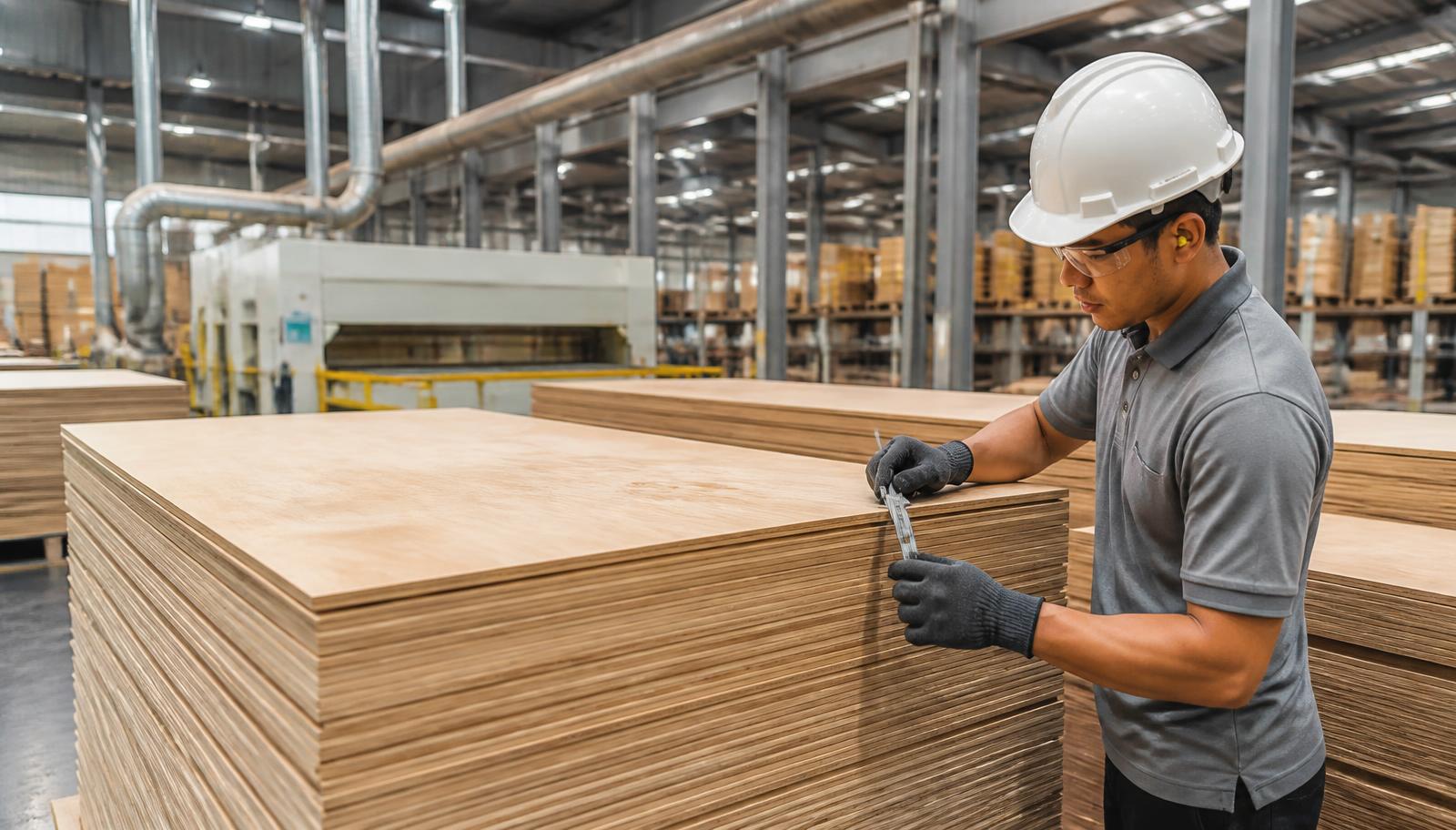
- Thickness and calibration measurement on a 30-panel sample
- Container loading inspection: edge protection, desiccant, plastic wrapping, ventilation
- Third-party formaldehyde emission test per batch for CARB/TSCA orders
Logistics notes
Panels are dense — a 40ft container hits its weight limit before its cube. Vietnam to US West Coast transits 20–26 days; Laem Chabang to Rotterdam 28–34 days. Moisture damage in transit is the most common claim; we specify desiccant quantity and container condition checks in every contract.
How TUSKO helps
We audit mills for certification validity (not just possession of a certificate), run glue-bond and moisture testing at the factory, and supervise container loading. One contact, one landed price, fees built into the product cost.
Talk to us: WhatsApp Business @tuskoconsulting (reply within 12-24 hours) or contact@tuskoconsulting.com.
FAQ
Is Vietnamese plywood CARB compliant for the US?
Certified mills are, but compliance is per-batch, not per-factory. Require a TSCA Title VI test report and a mill label on every panel bundle; we verify both at pre-shipment inspection.
What is the minimum order?
Effectively one 40ft container. Most mills will mix two to four SKUs per container, which lets new importers test a range.
How does EUDR affect my plywood imports?
Every shipment to the EU needs a due-diligence statement with plot-level geolocation. Only work with FSC/PEFC-certified mills with digital traceability — we screen for this before quoting.