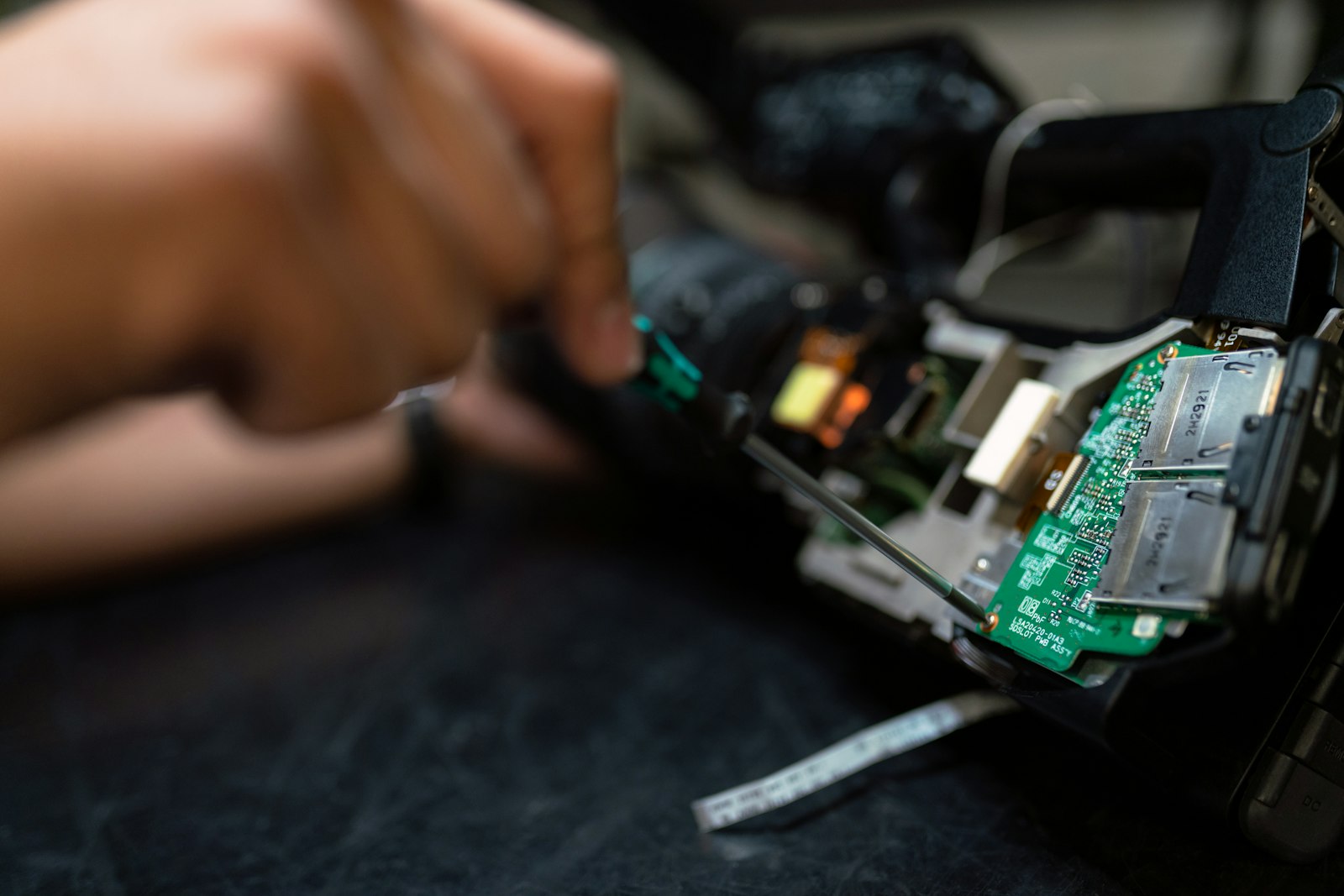
Contract Assembly in Thailand 2026: From PCBA to Sub-Assembly to Box-Build
Thailand has quietly become one of the most dependable contract-assembly destinations in Asia. Decades of automotive Tier-1 work, the hard-disk industry's legacy, and the recent EV/electronics wave have built a workforce and supplier base that can take a customer's BOM and ship a finished, packed unit — not just a component.
This guide is for foreign OEM buyers evaluating Thailand as an assembly origin in 2026.
1. What "assembly" actually means here
The market splits into four overlapping tiers:
- PCBA (printed circuit board assembly) — SMT and through-hole population on bare boards. Volume players are EMS giants in Ayutthaya and Chonburi; mid-tier shops sit around Bangkok and Rayong.
- Mechanical sub-assembly — sheet metal + fasteners + cable + label, usually for industrial enclosures, HVAC modules, automotive sub-systems.
- Electromechanical sub-assembly — PCBA + harness + housing, tested as a module (e.g. motor controllers, sensor modules, control panels).
- Box-build / full product — finished consumer or industrial unit with packaging, manuals, retail-ready labels, and serialization.
Most foreign buyers underestimate how far Thai shops can take a product. A well-qualified Tier-2 shop in Chonburi can hand you a sealed retail box with multilingual manuals and an FCC label — not just a bag of populated boards.
2. Where the capacity sits geographically
| Cluster | Specialty |
|---|---|
| Ayutthaya / Pathum Thani | Large EMS, automotive electronics, HDD legacy |
| Chonburi / Laem Chabang | Box-build, consumer electronics, white goods |
| Rayong / EEC | Automotive Tier-1, EV components, large mechanical |
| Samut Prakan / Bangkok fringe | SME assembly, prototyping, low-mid volume |
| Lamphun (north) | Optoelectronics, semiconductor back-end |
The Bangkok–Eastern Seaboard corridor (Highway 7) is the spine. A part can move from injection moulding in Chonburi to PCBA in Ayutthaya to final assembly in Samut Prakan and out of Laem Chabang inside a week without leaving an air-conditioned truck.
3. Cost structure in 2026
A useful mental model for a box-build quote:
- Material (BOM): 65–80% — dominated by ICs, displays, motors, batteries; Thai content is mostly mechanical and passive
- Direct labor: 4–8% — Thailand is NOT a low-labor-cost country anymore (min wage ~THB 370/day, skilled ops THB 18–28k/month)
- Factory overhead: 8–12% — depreciation on SMT lines, utilities, QC
- SG&A + margin: 8–15% — varies wildly between Tier-1 EMS and SME shops
Thailand wins on total landed cost, not labor. The win comes from: (a) mature supplier base inside the country, (b) low logistics friction to Laem Chabang, (c) BOI tax incentives passed partially to customers, (d) FTA coverage (ATIGA, AJCEP, RCEP, JTEPA, AANZFTA, TAFTA).
If labor cost is the deciding factor, Vietnam or Indonesia will usually beat Thailand. If on-time, on-spec delivery with engineering support matters more, Thailand usually wins.
4. Qualification — what good looks like
Before placing real-money POs, walk these steps. Skipping them is the #1 source of disappointment.
- Capability audit on site. Confirm SMT line vendors and ages (Panasonic NPM, ASM SIPLACE, Yamaha YSM — anything older than ~10 years means lower fine-pitch yield), AOI/SPI coverage, X-ray for BGA, ICT/FCT capability.
- Process documentation review. IPC-A-610 Class 2 or 3? J-STD-001? Look at the actual workmanship boards on the line, not the framed certificates.
- NPI (new product introduction) discipline. Ask to see a real NPI gate package from a recent customer (sanitized). If they can't show one, they don't do NPI.
- Test coverage. What % of nets are ICT-covered? What's the FCT script? Is there a HASS/ORT plan?
- Traceability. Serial number → SMT operator → reel lot → solder paste batch. Modern MES is now standard at Tier-1 and increasingly at Tier-2.
- Pilot run. 50–200 units, your real BOM, full test data review. This is non-negotiable.
5. Common foreign-buyer mistakes
- Asking for a quote on day one with no DFM review. You'll get a number that's either padded or wrong. Pay for a DFM/DFA review first.
- Treating the EMS like a contract manufacturer of components. They expect a complete, frozen design package — BOM with approved manufacturer parts (AMPL), Gerbers, pick-and-place, stencil, assembly drawings, test spec.
- Ignoring component sourcing strategy. In 2026, IC lead times for legacy nodes (28/40/55 nm) are still long. The EMS is not magic — if you specified a part that's on 52-week lead time, that's your line-down risk.
- Underestimating IP control. Tier-1 Thai EMS will sign and respect NDAs and IP clauses. SME shops are a mixed bag. Decide based on the actual paper trail, not assumptions.
6. BOI, free zones, and duty
If your assembly is for export, work with a shop inside a Free Zone or under a BOI Section 36 (raw material import for export) scheme. Done correctly:
- Imported components enter duty-free
- Finished product exports with no Thai VAT or import duty embedded
- Form D / Form AJ / Form AK issued at the gate
Done incorrectly, you'll pay 5–10% in unrecoverable duty on components — enough to wipe out your margin.
7. Where Thailand fits versus alternatives
- vs Vietnam: Vietnam is cheaper on labor and increasingly capable in EMS, but the supplier-base depth for mechanical, cable, and packaging is shallower. Thailand wins for box-build with high mechanical content.
- vs Malaysia (Penang): Penang is stronger on high-mix high-complexity SMT and semiconductor back-end. Thailand wins on cost and on mid-volume box-build.
- vs China: China is unbeatable on cost at high volume and unmatched on speed-to-prototype. Thailand wins on tariff exposure (US 301, EU CBAM), labor stability, and FTA access into Japan/Korea/Australia.
8. Practical 90-day plan to qualify a Thai assembler
- Weeks 1–3: Long-list 6–8 candidates, NDAs out, BOM and Gerbers shared
- Weeks 3–5: Three on-site audits, DFM feedback
- Weeks 5–8: Quotes back, pricing reconciliation, pilot PO at top 2
- Weeks 8–12: Pilot build, test data review, supplier selection, MSA + quality agreement
This is how mid-market OEMs actually do it. Anything faster is gambling.
FAQ
Q: Minimum order quantity I should expect for box-build? A: Tier-1 EMS targets 10k+ units/year per SKU. Tier-2/SME shops will happily run 500–2,000/year. Below 500/year, look at prototype-house pricing, not contract-assembly pricing.
Q: Do Thai EMS handle component procurement, or do I consign? A: Both models exist. Turnkey (EMS buys everything) is standard for stable BOMs. Consigned (you ship parts) is common for restricted ICs or NDA components. Mixed models (EMS buys passives, customer consigns ICs) are very common in 2026.
Q: How long from contract to first shipment? A: For a product that's already DFM-clean: 12–16 weeks (tooling 8–10, NPI 4–6, pilot then ramp). For a new design that needs DFM work: budget 6–9 months.
Q: Will the assembler help with certification (FCC, CE, PSE)? A: They'll support the testing (provide units, fix findings) but won't own the certification. Use an independent test lab (TÜV, UL, Intertek — all have Bangkok offices).
Q: How is IP protected? A: NDA + quality agreement + clear ownership of tooling, test fixtures, and firmware. For sensitive products, keep final-stage programming and key injection outside the EMS (in a separate secure facility or at your own engineer's laptop).
Q: Is Thailand a good fit for low-volume, high-mix industrial products? A: Yes — this is arguably Thailand's sweet spot in 2026. The SME assembly cluster around Bangkok and Samut Prakan is built for exactly this profile.