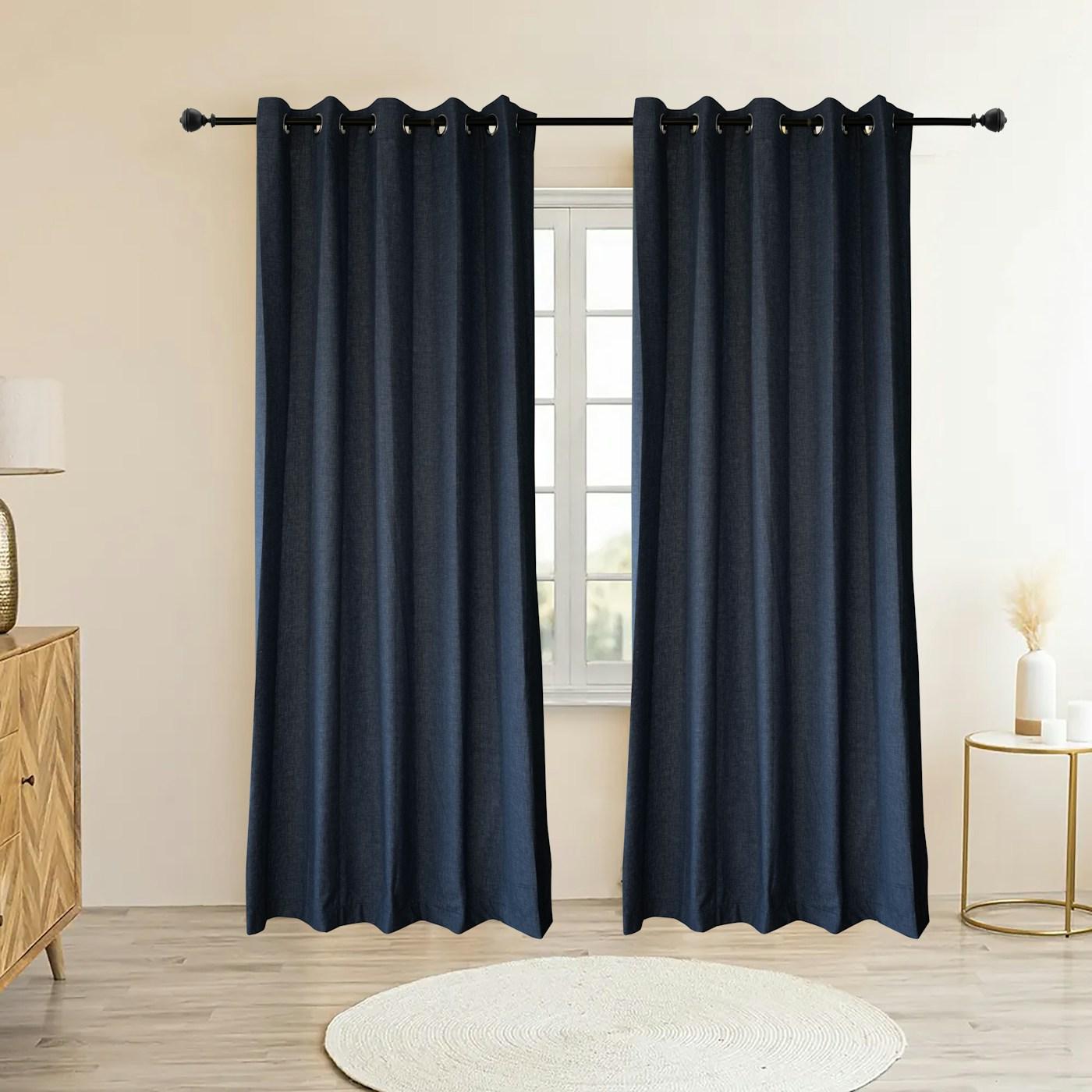
Cover context: Window-treatment context; visible curtains do not establish hardware specifications.
Quick answer: Importers can evaluate curtain rods & track hardware manufacturing and export from ASEAN through a specification-led program. For non-motorised indoor window-treatment support sets, compare demonstrated capability in tube forming or extrusion, cutting, surface finishing and hardware assembly, control specified metal rods or extruded tracks, mounting brackets, fasteners, finials and sliders, and verify the finished product for its intended destination. TUSKO coordinates qualification, samples, commercial terms and delivery as your single point of contact. This guide covers buyers in the US, UK, EU, Canada, Australia and New Zealand; national origin alone is not evidence of quality, compliance or a lower landed cost.
Why source curtain rods & track hardware from ASEAN in 2026
ASEAN is a region to evaluate for diversification, not a guarantee that any selected site can produce the required product. Begin with the actual manufacturing route: tube forming or extrusion, cutting, surface finishing and hardware assembly. Establish which operations are performed in-house, how incoming materials are identified, and how subcontracted processes are controlled. The practical goal is a repeatable specification and accountable order execution, rather than a country label on a quotation.
- Compare stock designs, private-label adaptations and custom construction separately; their sampling and approval requirements differ.
- Use the same acceptance criteria across candidate production routes so quoted prices reflect the same product.
- Evaluate destination documentation, packing and repeat-order controls together with functional performance.
SKU architecture: complete sets versus replacement hardware
Distinguish a complete installed set from a rod-only or replacement-bracket SKU. A comparison that omits finials, brackets, carriers or fasteners can understate the delivered cost and the installation work. Specify the usable span and required supports as a system. For telescoping designs, agree minimum overlap and how the internal section is retained. For tracks, define carrier compatibility and end-stop attachment. Spare parts should be identified by a controlled reference, not by a photograph, because small differences in profile or fastener location can make replacements incompatible.
Build an RFQ matrix with a separate row for each curtain rods & track hardware SKU: construction, dimensions, colour or finish, permitted variations, packing, inspection method and evidence required. Identify which features are mandatory and which are options. TUSKO uses this controlled brief to compare relevant production routes and coordinate approvals; buyers do not need to manage multiple manufacturing contacts. Keep the matrix updated when samples change, and avoid releasing a purchase order against a visual reference that conflicts with the written acceptance criteria.
Country comparison: where to source curtain rods & track hardware
The following are sourcing routes to investigate, not verified endorsements of every manufacturer in these countries. TUSKO qualifies the specific production site and material chain before order approval. Where a required process or material is imported, account for its effect on scheduling and origin evidence.
| Country | Manufacturing route to evaluate | Buyer qualification focus |
|---|---|---|
| Vietnam | Evaluate tube forming or extrusion, cutting, surface finishing and hardware assembly capability for curtain rods & track hardware; verify the actual equipment, input materials and approved construction. | Installed load: Test the complete set at the approved span with defined bracket positions and representative curtain weight. Do not quote a load capacity without its installation conditions. Country selection alone does not establish this capability. |
| Thailand | Evaluate tube forming or extrusion, cutting, surface finishing and hardware assembly capability for curtain rods & track hardware; verify the actual equipment, input materials and approved construction. | Extension and joints: Check telescoping overlap, joints, straightness and sag. Assess fit and movement at minimum and maximum stated lengths. Country selection alone does not establish this capability. |
| Malaysia | Evaluate tube forming or extrusion, cutting, surface finishing and hardware assembly capability for curtain rods & track hardware; verify the actual equipment, input materials and approved construction. | Finish durability: Inspect coating adhesion, scratches, corrosion response and colour consistency. Match the finish to actual indoor humidity and handling conditions. Country selection alone does not establish this capability. |
How to source curtain rods & track hardware from ASEAN: 6 steps
1. Define the product and destination requirements
Write a controlled brief for non-motorised indoor window-treatment support sets. Specify specified metal rods or extruded tracks, mounting brackets, fasteners, finials and sliders, usable dimensions, appearance, functional limits, artwork and packing. Separate legal obligations from retailer preferences. Define who approves samples and which changes require renewed approval; a reference photograph is useful, but it is not a measurable acceptance standard.
2. Build a qualified manufacturing shortlist
TUSKO reviews the relevant tube forming or extrusion, cutting, surface finishing and hardware assembly operations, equipment, capacity and quality records. Check that the proposed construction can be produced consistently, not merely that a showroom sample exists. Material traceability, inspection records and control of outsourced work matter when a small construction change affects performance. The buyer remains in contact with TUSKO throughout.
3. Compare samples against one approval standard
Use representative samples and methods covering installed load, extension and joints, finish durability. Record sample identity, test conditions and results. An attractive handmade sample does not prove production repeatability. Approve a master reference and a written specification; if they conflict, resolve the conflict before releasing production.
4. Confirm testing and compliance evidence
Mounting performance depends on wall substrate, fasteners and installation. Do not treat a universal fixing pack as evidence that the set suits every wall, and assess cord-related risks separately where present. Build an evidence matrix identifying the requirement, affected material or component, test or review method, responsible party and required record. Reports should match the SKU and construction being purchased. Do not assume a certificate from a different model or material covers the order.
5. Lock the commercial and quality plan
Confirm quantity by SKU, colour and packaging variant, approval dates, inspection gates and shipping terms through TUSKO. Separate an indicative schedule from an agreed release plan. Avoid promising minimum quantities, tooling cost or lead time before the specification and material route are assessed. All commercial comparison should use complete order pricing and clear inclusions.
6. Inspect, load and retain batch records
Inspect the production batch against the approved curtain rods & track hardware specification and agreed sampling plan. Check product identity, functional checks, labels, carton counts and shipping condition. Sampling can identify defects but cannot replace required safety verification. Retain inspection results, material records, approved artwork and lot references for receiving and replenishment.
Product-specific quality checklist
Translate the following checks into a method, sample size, conditioning procedure, numerical tolerance where relevant, and documented pass/fail decision. Keep cosmetic grading separate from safety and functional acceptance. Test the final assembled construction and packed retail configuration rather than isolated materials alone.
| Control point | What to verify | Evidence to retain |
|---|---|---|
| Installed load | Test the complete set at the approved span with defined bracket positions and representative curtain weight. Do not quote a load capacity without its installation conditions. | Identified construction and sample, agreed method and conditions, recorded result, pass/fail decision and corrective action. |
| Extension and joints | Check telescoping overlap, joints, straightness and sag. Assess fit and movement at minimum and maximum stated lengths. | Identified construction and sample, agreed method and conditions, recorded result, pass/fail decision and corrective action. |
| Finish durability | Inspect coating adhesion, scratches, corrosion response and colour consistency. Match the finish to actual indoor humidity and handling conditions. | Identified construction and sample, agreed method and conditions, recorded result, pass/fail decision and corrective action. |
| Sliding performance | For tracks, check carrier travel, stops and snagging under the intended load. For rings, review contact wear and noise against the approved rod surface. | Identified construction and sample, agreed method and conditions, recorded result, pass/fail decision and corrective action. |
| Fixings and packing | Control screw and bracket counts, sharp edges and installation instructions. Protect long sections from bending and rubbing during transport. | Identified construction and sample, agreed method and conditions, recorded result, pass/fail decision and corrective action. |
Destination-market caution: Mounting performance depends on wall substrate, fasteners and installation. Do not treat a universal fixing pack as evidence that the set suits every wall, and assess cord-related risks separately where present.
Export documents and destination-market checks
Prepare the commercial invoice, packing list and transport document with consistent product descriptions, quantities and origin information. Confirm tariff classification for the exact construction with a qualified customs adviser; one broad product label can cover multiple classifications. Preferential duty treatment depends on the applicable agreement, origin rules and supporting documents, not simply shipment from an ASEAN port.
For EU consumer products, review the General Product Safety Regulation and any category-specific rules, including traceability and the responsible economic operator where applicable. Review category-specific obligations according to the actual construction, intended use and claims. In the US, identify the applicable product rules and whether a General Certificate of Conformity or children’s-product requirements apply; not every adult household product needs the same certificate. UK, Canadian, Australian and New Zealand obligations should be checked separately rather than inferred from EU paperwork.
Landed-cost comparison and repeat-order control
Compare curtain rods & track hardware on the same materials, performance and pack configuration. Include product and packaging, freight, insurance where agreed, duty, clearance, testing and relevant destination charges. State the currency, shipping term and assumptions. Do not apply a single tariff percentage to all destinations or advertise guaranteed savings without a comparable benchmark.
Carton cube, breakage risk, receiving failures and replenishment consistency can change the economics of an apparently cheaper item. Record carton dimensions and units, assess container or parcel utilisation, and keep the benchmark like-for-like. TUSKO provides one coordinated commercial proposal with the agreed order inclusions, rather than asking the buyer to manage separate manufacturing contacts.
For repeat orders, preserve the approved specified metal rods or extruded tracks, mounting brackets, fasteners, finials and sliders, material and hardware references, artwork, test criteria and packing plan. Define what happens if an input becomes unavailable. Review substitutions before production; a similar-looking replacement can behave differently in use or require updated evidence.
Frequently Asked Questions
Should buyers source rods or tracks?
Choose from curtain weight, desired movement, mounting location and appearance. Compare complete systems rather than a rod price against a track price that excludes brackets or carriers.
How is a curtain-rod load rating established?
Record span, supports, fasteners, substrate and load distribution in the test method. A rating without these conditions can be misleading and does not establish safety on every installation.
Can one set cover several window widths?
Telescoping or cut-to-length designs can cover ranges if overlap, stiffness and assembly are qualified. Specify minimum and maximum usable lengths and any additional support requirements.
What causes finish complaints?
Poor adhesion, inconsistent pretreatment, rubbing in packaging and colour variation can contribute. Compare the approved finish after transport simulation and retain finish references for replenishment.
Are cords part of the same risk assessment?
If the system includes cords, chains or loops, review the applicable window-covering safety rules and intended installation. A non-motorised product is not automatically free of entanglement hazards.
What belongs in the quotation request?
Include system drawings, length range, curtain load, bracket arrangement, finish, hardware pack, mounting conditions, destination and quantities. TUSKO coordinates qualification and a complete order proposal.
Sources and scope
Official starting points include the EU General Product Safety Regulation and US CPSC guidance on General Certificates of Conformity. Confirm which rules apply to the exact finished product; neither source is evidence of a particular manufacturer’s capability. This is procurement guidance, not legal advice, a confirmed quotation or a guarantee of regulatory approval. Requirements in the UK, Canada, Australia and New Zealand must be checked separately.
Related sourcing resources
For wider category context, review our related ASEAN category guide; this article focuses on the specific product construction and acceptance controls.
Compare landed-cost assumptions, explore ASEAN product options, or review the ASEAN import workflow.
Work with TUSKO
Send TUSKO your curtain rods & track hardware brief, intended use, destination, quantity by SKU, target timing, packaging and current benchmark. TUSKO coordinates production qualification, samples, documented quality controls and delivery through one point of contact. The first useful output is a clear specification and sourcing plan, followed by a proposal based on the approved requirements.
WhatsApp Business: @tuskoconsulting — contact TUSKO by WhatsApp or email
Email: contact@tuskoconsulting.com
Reply within 12-24 hours.