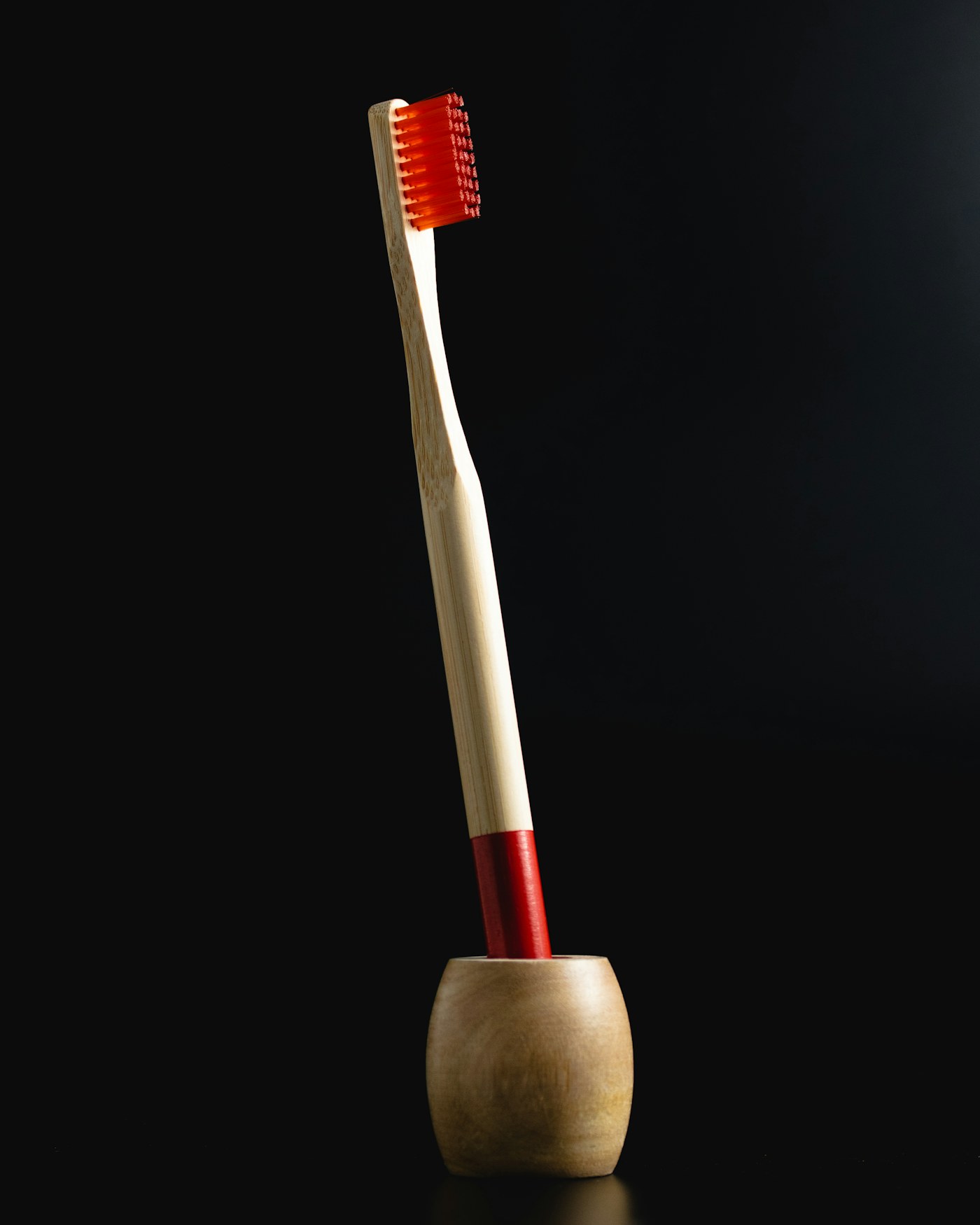
Cover context: Toothbrush storage context; the photograph does not establish material or product compatibility. Photo: Unsplash.
Quick answer: Buyers evaluating toothbrush holders manufacturing and export from ASEAN should begin with intended use, an approved construction and destination-market evidence. The relevant production route is polymer moulding, ceramic forming, metal fabrication and assembly of dividers or mounting parts. Control specified holder body, contact surfaces, dividers, finish and base or mounting components and assess opening fit, cleaning access and stable placement before comparing prices. TUSKO coordinates qualification, samples, order terms and delivery as your single point of contact. This guide is for importers, private-label brands and distributors serving the US, EU, UK, Canada, Australia and New Zealand; it does not claim that country of origin guarantees quality, approval or cost savings.
Why evaluate toothbrush holders sourcing from ASEAN?
ASEAN offers production routes to investigate for a diversified sourcing program. The useful comparison is between qualified sites making the same specification, not between national labels attached to dissimilar products. For toothbrush holders, establish the actual forming, assembly and finishing operations, the origin and control of inputs, and how subcontracted steps are verified. A presentation catalogue does not establish repeatable manufacturing capability.
A sourcing brief should distinguish a standard existing design, a private-label adaptation and a new custom design. Changing a logo may be straightforward; changing geometry, materials, a mechanism or an attachment can require new tooling and fresh evidence. TUSKO uses the brief to coordinate a comparable qualification process and identify open questions before order approval. Buyers can compare the resulting proposal without managing several manufacturing contacts.
Product specification: Opening fit, cleaning access and stable placement
This guide covers passive adult toothbrush storage, not UV sanitizers, powered cleaners or toothpaste-dispensing mechanisms. Define the items the holder must accept: manual toothbrush handles, larger electric-brush handles, toothpaste tubes or removable brush heads. Record opening dimensions and actual compartment clearance. A listing that says universal fit should have clear supporting limits rather than rely on the appearance of a single brush in a photograph.
A tall handle creates a different tipping risk from a short toothpaste tube. Assess uneven loading, removal force and the stability of the base on wet counters. Check that openings do not scrape or jam the intended handles. If the design suspends brushes, review retaining features and whether bristles contact adjacent surfaces. A holder cannot guarantee hygienic storage simply by separating handle holes; cleaning, ventilation and user practice still matter.
Water retention is a practical quality concern. Review drainage paths, removable inserts and access to the interior. Small blind cavities or permanently attached dividers can trap residue. For ceramic, inspect internal glaze and chips around openings, not just the visible outside finish. For metal, assess wet-environment corrosion and joint finish. For polymer parts, check flash inside holes and the fit of snap-in dividers.
Wall-mounted designs require an explicit attachment strategy. Suction, adhesive pads and mechanical screws are not interchangeable. State approved surface conditions, preparation, installation instructions and the load scenario. A hook that remains attached when empty may fail when several electric handles are loaded. Assess changes after water and cleaning exposure using a relevant agreed method, and do not claim compatibility with every tile or painted surface.
Do not add sanitizing or germ-reduction language unless the exact product and claim have been reviewed and substantiated. Adding a UV source changes both the product scope and its risk assessment. A passive holder should be described through fit, cleanability, drainage, finish and stability. Preserve these functional requirements when a retail buyer requests new colours or a coordinated bathroom set.
Country comparison: qualify a manufacturing route, not a country label
The table identifies candidate sourcing routes to investigate. It is not a ranking of countries, a verified supplier directory or a statement that every listed country has an approved site for this product. Qualification must establish process capability, input traceability, sample performance and the production controls relevant to the actual order. Imported inputs can also affect scheduling and origin analysis.
| Candidate country | Production route to investigate | Evidence needed before approval |
|---|---|---|
| Thailand | Investigate a site with demonstrated polymer moulding, ceramic forming, metal fabrication and assembly of dividers or mounting parts capability. Confirm which processes occur at the proposed site. | Compartment clearance: Measure openings and verify fit with agreed manual and electric handle references. |
| Vietnam | Investigate a site with demonstrated polymer moulding, ceramic forming, metal fabrication and assembly of dividers or mounting parts capability. Confirm which processes occur at the proposed site. | Stability: Assess uneven loading and removal on the approved wet-counter arrangement. |
| Malaysia | Investigate a site with demonstrated polymer moulding, ceramic forming, metal fabrication and assembly of dividers or mounting parts capability. Confirm which processes occur at the proposed site. | Cleaning access: Inspect internal corners, inserts and drainage; review the stated care method. |
| Indonesia | Investigate a site with demonstrated polymer moulding, ceramic forming, metal fabrication and assembly of dividers or mounting parts capability. Confirm which processes occur at the proposed site. | Surface finish: Check opening edges, glaze continuity, corrosion-prone joints and polymer flash. |
RFQ checklist and private-label development
Create one line per toothbrush holders SKU with intended use, drawing or dimensions, approved material references, colour, finish, quantity, packing and destination. State whether reference samples are binding approvals or only visual inspiration. Identify mandatory features and permissible alternatives. If two dimensions conflict between a drawing and a retained sample, resolve the conflict before quotation or manufacturing release.
- Specify quantities by colour and construction, not only a combined order total.
- Identify the required evidence for performance and destination claims.
- Separate one-time development assumptions from repeat-order production assumptions.
- Provide unit-pack, master-carton and retail labelling requirements before a packing estimate.
- Record decision dates, approval ownership and the required receiving location.
There is no universal minimum order quantity or lead time for this category. Tooling, material availability, colour changes, assembly complexity, test scheduling and carton configuration can alter both. Ask TUSKO to separate material procurement, sample approval, production, inspection and freight assumptions in the proposed schedule. A promised dispatch date should not be mistaken for arrival at the destination warehouse.
Sampling and production release
Use a sample matrix rather than approving one attractive display item. For toothbrush holders, compare the proposed construction against the written brief and assess the functional checks below. A handmade or separately finished sample may not represent the production route; record how it was made and whether a production-representative trial is needed. Keep labelled retained references for the approved material, assembly, finish and packing.
Record deviations explicitly: approved, rejected or pending evidence. Do not release an order with a safety or core-function deviation treated as an unspecified later correction. Agree which inspection methods and laboratory work support release, who reviews the evidence and what happens when a result fails. Suggested buyer checks are not automatically statutory tests, and a successful visual inspection cannot replace applicable regulatory evidence.
Quality-control table: checks for the finished product
Set acceptance criteria before inspection. Methods should identify the sample, conditions, equipment where relevant and a repeatable decision rule. The checks below are procurement priorities, not invented universal certification thresholds. A technical reviewer should adapt them to the design, claims and intended market.
| Control point | Product-specific assessment | Release record |
|---|---|---|
| Compartment clearance | Measure openings and verify fit with agreed manual and electric handle references. | Retain SKU and batch identification, method, conditions, result and disposition; resolve any failure before release. |
| Stability | Assess uneven loading and removal on the approved wet-counter arrangement. | Retain SKU and batch identification, method, conditions, result and disposition; resolve any failure before release. |
| Cleaning access | Inspect internal corners, inserts and drainage; review the stated care method. | Retain SKU and batch identification, method, conditions, result and disposition; resolve any failure before release. |
| Surface finish | Check opening edges, glaze continuity, corrosion-prone joints and polymer flash. | Retain SKU and batch identification, method, conditions, result and disposition; resolve any failure before release. |
| Mounting and scope | Review approved attachment surfaces and instructions; keep passive holders separate from powered sanitizing products. | Retain SKU and batch identification, method, conditions, result and disposition; resolve any failure before release. |
Destination rules and evidence: US, EU, UK, Canada, Australia and New Zealand
For passive adult household accessories, review foreseeable mechanical hazards, finishes, attachment and cleaning claims. General consumer-product obligations can apply even when there is no power supply. In the EU, assess the General Product Safety Regulation and any relevant category-specific legislation, including traceability, safety information and the responsible economic operator. CE marking is not a general quality badge for every household item. Do not add antibacterial, disinfecting or sanitizing claims without a separate evidence and regulatory review.
The UK is not a single extension of EU paperwork: Great Britain and Northern Ireland can follow different product frameworks. Canada, Australia and New Zealand also require their own review of the actual construction, intended use and claims. In the US, determine whether a specific consumer-product rule triggers a General Certificate of Conformity; not every adult household article needs the same certificate. Products marketed to children may change the assessment. Confirm current obligations with competent advisers before artwork and shipment approval.
Export paperwork, origin and tariff classification
Use consistent toothbrush holders descriptions on the commercial invoice, packing list and transport documents. Include the correct quantities, packaging units and origin information. Confirm tariff classification for the exact construction with a qualified customs adviser; a general product name is not enough to select a universal code or duty rate. Composite materials, sets and accessory combinations can affect classification. Do not substitute shipment location for manufacturing origin.
Preferential treatment depends on the applicable agreement, its product-specific origin rules and supporting documentation. Imported inputs and processing must be evaluated rather than assuming that dispatch from an ASEAN port establishes eligibility. Keep the underlying origin analysis and relevant records with the order. Check any wood-packaging requirements separately from the product itself, and confirm destination documentation before the container is loaded.
Landed cost, packaging and repeat-order planning
Compare toothbrush holders proposals using the same construction, performance evidence, assortment and packing. Include the agreed product and packaging, freight, insurance where included, duty, clearance, relevant testing and destination handling assumptions. State currency, shipping term, receiving point and validity. TUSKO coordinates one commercial proposal with clear inclusions. A lower ex-works item price does not establish a lower delivered cost when the products or shipment assumptions differ.
Check carton cube and units per carton against the actual packed sample. Fragile finishes, protruding components and poorly nested parts can increase both freight and damage. Use an agreed transport assessment suited to the distribution route rather than assume sea-freight cartons will also protect direct-to-consumer parcels. Retail labels, barcode placement and accessory counts should be verified before packing release, because receiving errors can delay usable inventory.
Preserve the approved bill of materials, drawings, finish references, test scope, artwork and packing plan for replenishment. Require review of substitutions before production. A visually similar material, connector or coating can change performance and invalidate earlier evidence. Forecast by SKU and maintain a record of receiving damage, returns and corrective actions so the next order addresses the actual failure mode rather than simply repeating a sample approval.
Frequently Asked Questions
Does this guide cover UV toothbrush sanitizers?
No. A powered sanitizing product has a different safety and claims assessment. Passive storage evidence cannot support UV or germ-killing claims.
Can one holder fit every electric toothbrush?
Do not assume universal fit. State compartment dimensions and verify the intended handle models or dimensional range.
Why inspect the inside of a ceramic holder?
Internal glaze defects, chips and inaccessible cavities can affect safe handling and cleaning even when the exterior looks acceptable.
How do I begin a toothbrush holders sourcing project with TUSKO?
Send the intended use, dimensions, material preferences, quantity by SKU, destination, packing and target timing. TUSKO coordinates qualification and sample approval through one point of contact; a confirmed proposal follows the approved requirements.
Is manufacturing in ASEAN enough to qualify for lower import duty?
No. Manufacturing origin, product classification, the applicable trade agreement and supporting records must all be assessed. Shipment from an ASEAN port alone does not establish preferential eligibility.
How can buyers compare minimum orders and landed cost fairly?
Compare identical construction, assortment, evidence and packing. Identify material, tooling and colour constraints, then compare delivered-cost inclusions using the same destination and shipping assumptions. There is no universal category MOQ or guaranteed saving.
Sources and scope
Official starting points: EU General Product Safety Regulation; US CPSC certificate guidance; Great Britain general product safety guidance. These sources define regulatory starting points, not evidence of a particular manufacturing site. This article is procurement guidance, not legal advice, a verified quotation or a promise of regulatory approval.
Related sourcing resources
For broader category context, read the related ASEAN sourcing guide. Compare landed-cost assumptions or explore ASEAN product options.
Compare another common export category: Toilet Paper Holders manufacturing and export from ASEAN.
Work with TUSKO
Send TUSKO your toothbrush holders brief and current benchmark. We coordinate production qualification, samples, quality controls and delivery through one point of contact. Start with a clearly defined product and market; the next step is a sourcing plan and commercial proposal based on approved requirements.
WhatsApp Business: @tuskoconsulting — contact TUSKO by WhatsApp or email
Email: contact@tuskoconsulting.com
Reply within 12-24 hours.