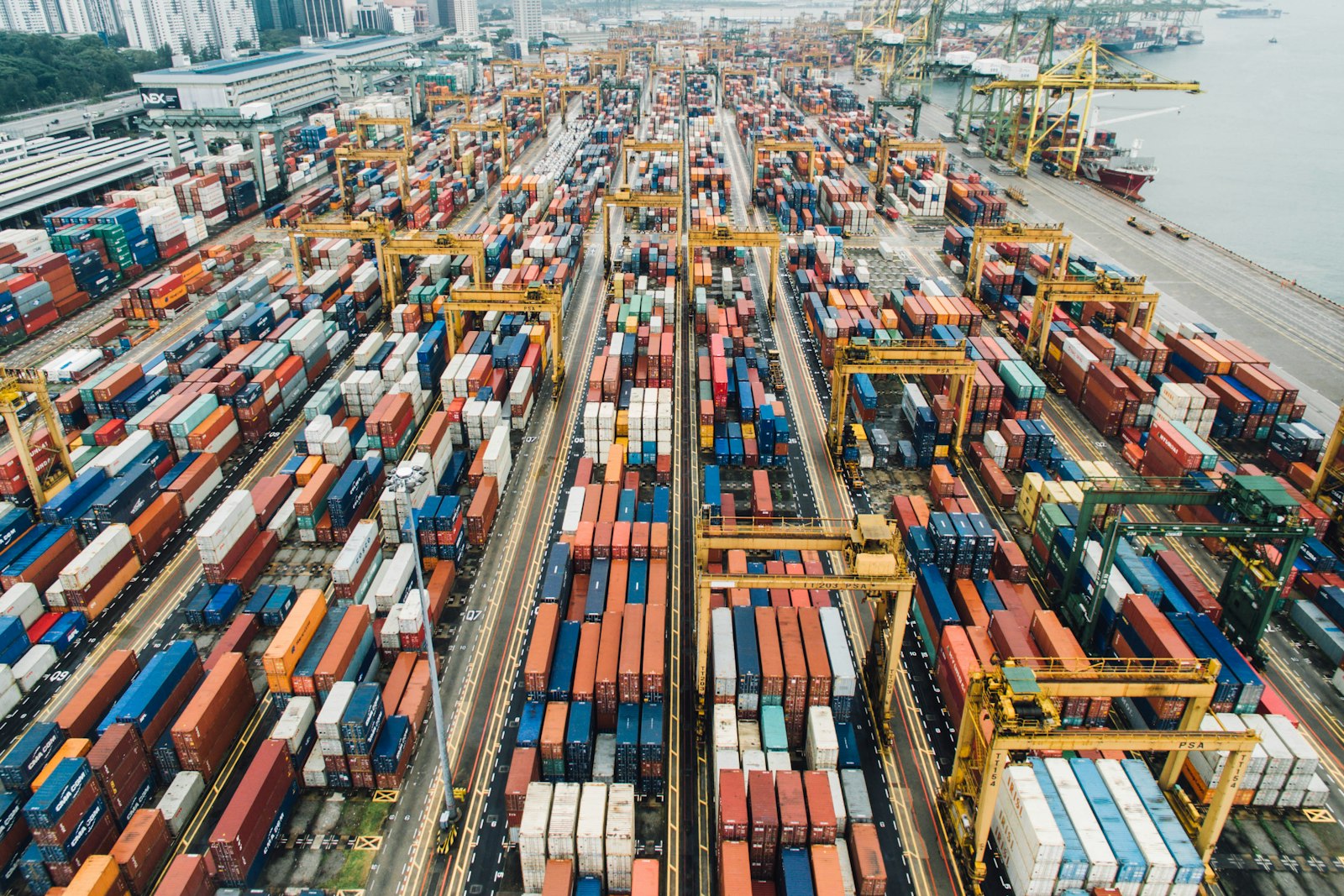
Most quotes you get from Thai factories arrive as "FOB Bangkok" or "FOB Laem Chabang." Most buyers accept the term without thinking. That's usually fine — until it isn't. The wrong Incoterm can add 15% to your landed cost or leave you uninsured for a USD 80,000 container in the middle of the Pacific.
This guide explains the four Incoterms that actually matter when sourcing from Thailand and the rest of ASEAN: EXW, FOB, CIF, and DDP. We use the 2020 revision (still current in 2026) and we focus on the version of each term that you'll actually see on a PO — not the textbook edge cases.
The one-line definition of each
- EXW (Ex Works) — You pick up at the factory gate. Everything else is yours: trucking, export clearance, port, freight, insurance, import duty, last-mile.
- FOB (Free On Board) — The factory delivers the goods on board the ship at the named origin port and clears them for export. From that moment, the goods are yours.
- CIF (Cost, Insurance, Freight) — FOB plus the factory pays sea freight to your destination port and buys minimum-cover marine insurance.
- DDP (Delivered Duty Paid) — The factory delivers to your door with all duties and taxes paid. Maximum convenience, maximum hidden margin.
FOB: the default for a reason
FOB is the right answer for 80% of buyers sourcing from Thailand. Reasons:
- The price is clean — you see exactly what the goods cost at the port and exactly what your freight forwarder charges to move them.
- You control the forwarder, which means you control transit time, routing, and the carrier you trust.
- You buy your own marine insurance at proper cover (110% of CIF value, all-risks) instead of the minimum that CIF requires.
- You decide whether to consolidate the container with other suppliers.
The named port matters. In Thailand it is almost always FOB Laem Chabang (the deep-sea port serving Bangkok and the EEC) or FOB Bangkok Port (Khlong Toei, for smaller volumes). Don't accept "FOB Thailand" — the port determines the trucking cost and the cut-off times.
CIF: when convenience is worth the margin
CIF means the factory books the freight and the insurance. It's fine when:
- You're new to importing and don't have a freight forwarder yet.
- The order is small (LCL, less than container load) and the factory has better rates than you do.
- You trust the factory and the destination port is a major one (Long Beach, Rotterdam, Felixstowe, Singapore).
The downside: the factory will mark up the freight by 5–15% and the insurance is usually the minimum Institute Cargo Clauses (C) cover — which excludes a long list of common damages. If your goods are over USD 20,000 in value, buy your own insurance separately and ask for FOB instead.
CIF insurance covers the factory's risk, not yours. The minimum cover protects them up to the moment the goods are loaded. You want all-risks cover to your warehouse door — buy it yourself.
DDP: the term that hides the most margin
DDP is seductive. The factory quotes one number, your goods arrive at your warehouse, and you never think about freight, customs, or duties. That convenience is also why DDP is the most expensive term — and the most exploited.
Three problems with DDP from ASEAN:
- Hidden freight margin. The factory adds 10–20% to the real freight cost. You'll never know because there's no breakdown.
- Customs liability without control. The factory acts as importer of record. If they undervalue the goods to lower your duty (common practice), you are on the hook with US Customs, HMRC, or your local authority when the audit comes — not them.
- Wrong HS code. Thai factories rarely know your destination country's tariff schedule. A 2% misclassification on a USD 50k order is USD 1,000 of unnecessary duty on every shipment, forever.
Use DDP only for small samples, e-commerce drop-ship orders, or when you genuinely have no import infrastructure. For real commercial volumes, DDP is the wrong term.
EXW: only if you have a strong forwarder in Thailand
Ex Works puts everything on you, including Thai export clearance. That requires a Thai-registered customs broker, knowledge of Thai export permits (some HS codes need them), and the ability to truck the goods from the factory to the port. Unless your forwarder has a real Bangkok office, EXW will cost you more than FOB — and the export-clearance risk is yours.
The one place EXW makes sense is when you consolidate goods from multiple Thai suppliers into one container at a CFS (container freight station). Your forwarder picks up each supplier's pallet at the factory gate, builds the container, and exports it. For multi-supplier programs this is the right term.
The Incoterm decision matrix
| Your situation | Right term |
|---|---|
| Single supplier, full container, you have a forwarder | FOB Laem Chabang |
| Single supplier, LCL, no forwarder yet | CIF [your port] |
| Multiple Thai suppliers, consolidated container | EXW [each factory] |
| Samples, e-commerce, small parcels | DDP or DAP via courier |
| First-order test under USD 5,000 | CIF or DDP for simplicity |
| Repeat orders above USD 20,000 | FOB — always |
Three line items to demand on every quote
Whatever Incoterm you settle on, ask the factory to break the quote into:
- Ex-works unit price — the actual goods cost at the factory gate.
- Origin charges — trucking, port handling, export clearance.
- Freight + insurance + destination charges — only if CIF or DDP.
This breakdown reveals the real product cost and tells you immediately whether the freight component is reasonable. A factory that refuses to break out the line items is hiding margin.
One number that matters more than Incoterms: total landed cost
Incoterms are a contract device, not a cost-management tool. The number that runs your business is total landed cost per unit at your warehouse door. Compute it for every quote, regardless of Incoterm, and compare on that basis. We built a free landed-cost calculator for exactly this; the rule is the same whether you use ours or your own spreadsheet: never compare suppliers on FOB price alone. For a deeper comparison see The Real Cost of Sourcing from ASEAN vs China.
How TUSKO sets terms for clients
For repeat-order programs we default to FOB Laem Chabang with a vetted forwarder, 30/70 T/T payment, and a pre-shipment inspection before balance release. For first-order tests under USD 10,000 we use CIF to keep the buyer's life simple. We avoid DDP on commercial volumes because the buyer should always be the importer of record on their own goods. Learn more about our sourcing and consulting services or discuss your next shipment with us.
Frequently Asked Questions
What is the safest Incoterm for a first-time buyer?
FOB Bangkok or FOB Laem Chabang. The seller handles export clearance and loads the container; you control the freight, marine insurance, and import. It gives you visibility into actual freight cost and prevents inflated CIF padding.
When does DDP make sense?
When you lack a customs broker in your country, when shipping low-value samples, or when the supplier has reliable freight partners and offers a competitive all-in price. Always confirm what 'duties' are included — VAT/GST is often excluded.
Why is CIF often more expensive than FOB plus your own freight?
Suppliers usually mark up the freight and insurance portion. On full container loads, buying FOB and arranging your own freight typically saves 5–12%.
Who pays for marine insurance under FOB?
The buyer. Always quote marine insurance separately — it is cheap (0.1–0.3% of cargo value) and covers loss or damage in transit.