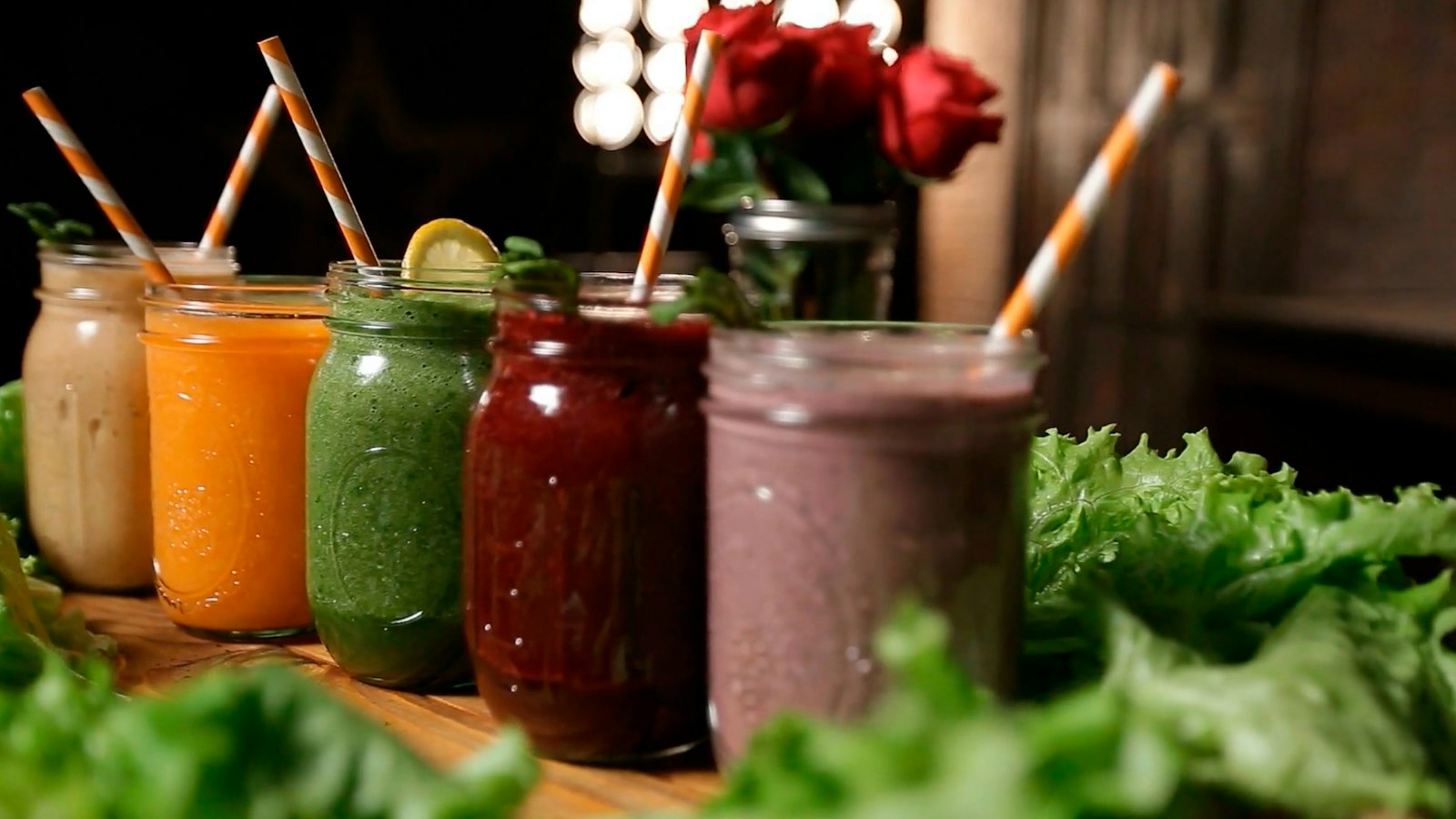
Illustrative image only; unrelated to real brands or clients. It does not depict a TUSKO client, product or factory. TUSKO maintains client and commercial confidentiality under NDA.
Unsplash illustration of smoothies in jars; the image does not show a TUSKO client product, brand or ASEAN factory.
Tropical fruit purées and smoothie bases from Southeast Asia feed juice bars, cafés, dairy and bakery manufacturers, baby-food makers and retail smoothie brands overseas. Mango, guava, passion fruit, banana, pineapple and dragon fruit are common. Buyers need consistent colour, flavour and Brix across seasons, plus robust food-safety and residue control, because purées are often used without further heating in chilled drinks. This ASEAN manufacturing and export guide is written for importers, OEMs and distributors in the United States, European Union, United Kingdom, Australia, Canada and Japan who need a dependable route from specification to delivered, compliant goods.
Quick Answer: What Should an Overseas Buyer Specify?
Start with the complete application and a controlled specification, then qualify the actual manufacturing route. For fruit purées and smoothie bases, the critical details are fruit variety and form, Brix, pH and pulp characteristics, processing and packaging format, microbiological and residue limits, and supply seasonality. Require documented first-article and shipment acceptance, verify destination-market obligations for the exact product, and review landed cost with current origin and customs evidence. A country name, certificate logo or matching photograph is not enough to approve a substitution.
Where in ASEAN Should You Evaluate Manufacturing?
ASEAN is a region, not a guarantee of a particular production capability. Compare manufacturing sites in Thailand, Vietnam, Malaysia and Indonesia using the same evidence pack. Country choice should follow verified process capability, component availability, export execution and the buyer’s required volume. This table is a screening framework, not a claim that every country has qualified suppliers for this product.
| Location to evaluate | Evidence to request | Decision rule |
|---|---|---|
| Thailand | Food/HACCP or GMP certification scope, lab testing and shipment route | Advance only a site whose documented process fits the approved design |
| Vietnam | Production versus trading role, component traceability and change control | Verify local manufacturing steps and qualification evidence |
| Malaysia | Application knowledge, material records and relevant test capability | Check model-specific scope rather than relying on a certificate logo |
| Indonesia | Halal, process controls, packing and export documentation | Confirm repeat-lot consistency and a viable shipment plan |
For fruit purées and smoothie bases, imported subcomponents may be part of an ASEAN build. Identify material and component sources, transformation steps and the applicable origin rule before making a country-of-origin claim. Shipment from an ASEAN port does not by itself establish ASEAN origin, and an attractive unit quotation should not outweigh missing qualification evidence. Compare the same approved specification across candidates and document unresolved questions before choosing a production route.
How Fruit Purées and Smoothie Bases Are Manufactured and Qualified
Processing usually involves fruit receiving and ripening, washing, sorting, peeling and destoning, pulping and refining through screens, enzymatic or thermal treatment, standardisation, then either aseptic sterilisation and filling into bag-in-drum or bag-in-box, or freezing in pails, IQF cubes or pouches. Smoothie bases may add other fruits, fibres or sweeteners. Raw fruit sourcing from many farms makes pesticide residue management and traceability critical controls.
Ask TUSKO to establish which operations are performed at the manufacturing site and which components are externally procured, then build the inspection plan around the actual process. Before changing production location, compare the approved specification, ingredient list and lab results with your current product rather than copying a retail sample.
Key Specifications to Lock Before Requesting Quotes
Use the following as a product-specific RFQ checklist. State the specification version, recipe or formula reference, distinguish mandatory requirements from optional preferences, and require written clarification where the proposed build differs. A quoted alternative should identify the deviation so it can be reviewed before approval.
| Specification | What to define | Why it matters |
|---|---|---|
| Fruit and variety | e.g. Alphonso-type vs Nam Dok Mai mango; single or blend | Flavour, colour and origin claims |
| Form | Single-strength, concentrate, frozen, aseptic | Shelf life, storage and freight cost |
| Physical specs | Brix, pH, acidity, viscosity, pulp/screen size | Consistency in finished drinks |
| Microbiology | Commercial sterility or count limits | Safety for cold use |
| Residues | Pesticide MRLs for destination market | Border compliance |
| Packaging | Aseptic bag-in-drum, BIB, frozen pails, retail pouches | Handling and customer equipment |
Product Details That Change the Order
Season planning matters. Mango harvest windows differ between Thailand, Vietnam and the Philippines; processors pack purée during the season and store aseptic or frozen stock. Agree annual volumes early so the supplier can pack enough of the right variety.
Specify for the end use: a smoothie chain needs pumpable viscosity and fixed sweetness, while a dairy manufacturer may need low microbial counts and specific acidity. Ask for typical and range values rather than single numbers.
Residue limits differ between markets. EU MRLs are often stricter than others, so suppliers need residue monitoring programmes tied to their farm sourcing, with lab reports by lot.
Quality Checks and First-Article Acceptance
Agree on the evidence before production starts. Tests need a method, conditions and acceptance limits, not simply a request for a test certificate. Distinguish first-article checks, which prove the formula and process can deliver the specification, from routine lot checks, which confirm each shipment stays within it. Record sample sizes and the response if a lot fails.
| Check | Method or evidence | Acceptance focus |
|---|---|---|
| Brix, pH, colour | Lab per lot; colour meter or visual standard | Within specification range |
| Microbiology | Commercial sterility for aseptic; counts for frozen | Meets agreed limits |
| Pesticide residues | Multi-residue screen by accredited lab | Below destination MRLs |
| Foreign matter | Screening, metal detection, visual inspection | No seeds, peel or foreign bodies |
| Sensory | Taste and aroma against reference | Matches approved standard |
| Cold chain | Temperature logs for frozen goods | Maintained at or below specified temperature |
Destination-Market Compliance for Fruit Purées and Smoothie Bases
In the United States, FDA facility registration, FSVP and Juice HACCP (for products marketed as juice) apply, along with the Food Traceability Rule for listed foods. Fruit and vegetable products may be subject to import alerts if residue or pathogen issues have occurred for a country or product.
In the EU, Regulation (EC) 396/2005 sets pesticide MRLs, and certain fruits from certain origins may face increased official controls under Regulation (EU) 2019/1793. Organic claims require EU organic certification of the exporter and control body.
The UK and Australia have their own MRL regimes and import inspection schemes; Australia's biosecurity rules can restrict fresh or minimally processed fruit, but properly processed purées usually follow food import rules.
Regulations change and depend on the exact configuration, so confirm current requirements with a qualified customs broker, food or product regulatory specialist before the first shipment. TUSKO coordinates the evidence pack but does not replace legal or conformity-assessment advice.
Landed Cost: What to Include Before Comparing Quotes
Compare delivered cost, not unit price. The following structure keeps quotations comparable. Figures depend on volume, specification and route, so no universal price or saving is implied.
| Cost element | What to confirm | Why it matters |
|---|---|---|
| Ex-works or FOB unit price | Quoted against the same approved specification and revision | Different specs make price comparison meaningless |
| Tooling, samples and first-article work | One-off or amortised; who owns tooling | Affects true cost of the first orders |
| Packing and palletising | Export packing, labelling, moisture and impact protection | Damage claims erase unit-price savings |
| Freight and insurance | Mode, consolidation and Incoterm responsibility | Volume and density drive cost per unit |
| Duties and border costs | Tariff classification, origin evidence, trade-remedy checks | Classification and origin must be verified for the exact product |
| Testing and compliance | Third-party tests, certificates and marking work | Required before sale in many destination markets |
Sampling and Production Process
A disciplined sequence reduces surprises: (1) send the specification pack and target market, label and packaging details; (2) receive clarifications and deviations in writing; (3) approve pre-production samples against measured data; (4) run a pilot lot with first-article inspection; (5) release mass production with in-process and pre-shipment checks; (6) review the first delivered lot and lock the change-control process. Any change of ingredient, packaging material, sub-supplier or process after approval should require written notice and re-qualification proportional to the risk.
Five Common Mistakes When Sourcing Fruit Purées and Smoothie Bases
- Ordering without a variety specification. Risk: Flavour and colour change between lots. Fix: Specify variety and reference sample.
- Ignoring seasonality. Risk: Stock-outs before next harvest. Fix: Agree annual forecast and stocks.
- No residue plan. Risk: Border rejections in strict markets. Fix: Require lot-based residue reports.
- Wrong format for equipment. Risk: Customer cannot handle drums or frozen blocks. Fix: Match packaging to end-user handling.
- Weak cold chain. Risk: Quality loss in frozen purée. Fix: Require temperature logging.
Frequently Asked Questions
Which purées does ASEAN produce?
Mango, guava, passion fruit, pineapple, banana, papaya, lychee and dragon fruit are common; availability varies by site.
Aseptic or frozen?
Aseptic purée stores at ambient temperature and saves freight; frozen often keeps fresher flavour but needs a cold chain.
Can I get organic purée?
Yes where farms and the processor are certified to your market's organic standard.
What MOQ applies?
Often a drum or pallet quantity for aseptic purée; retail pouches need larger runs for printing.
How are smoothie bases different?
They are ready-to-blend mixes, often combining fruits, fibre and sweeteners to a fixed recipe.
What should I send TUSKO for a purée enquiry?
Fruits, variety, form, Brix and pH ranges, packaging, certifications, annual volumes and destination.
How TUSKO Supports Your ASEAN Sourcing Enquiry
TUSKO supports ASEAN sourcing and trade enquiries as your single point of contact. Send the specification pack, destination, required documentation and expected order pattern so the enquiry can be evaluated against real capability and shipment requirements. The order quotation is assessed against the agreed scope and landed-cost assumptions, rather than an unsupported promise of the lowest price.
Email hello@tuskoconsulting.com or reach WhatsApp Business @tuskoconsulting through the contact page. We reply within 12–24 hours. For preliminary budgeting, use the landed-cost calculator; explore the ASEAN product recommender for related categories.
Sources and Scope
The technical guidance draws on publicly available manufacturer documentation and official standards or regulatory guidance. These sources explain product selection and scope; they do not verify a particular ASEAN manufacturing site, imply a TUSKO client result or establish universal prices, capacity or lead times.
- US FDA – Food Facility Registration and FSVP
- EU Pesticide MRL database
- UK Food Standards Agency – Importing food
- Australian Department of Agriculture – Importing food