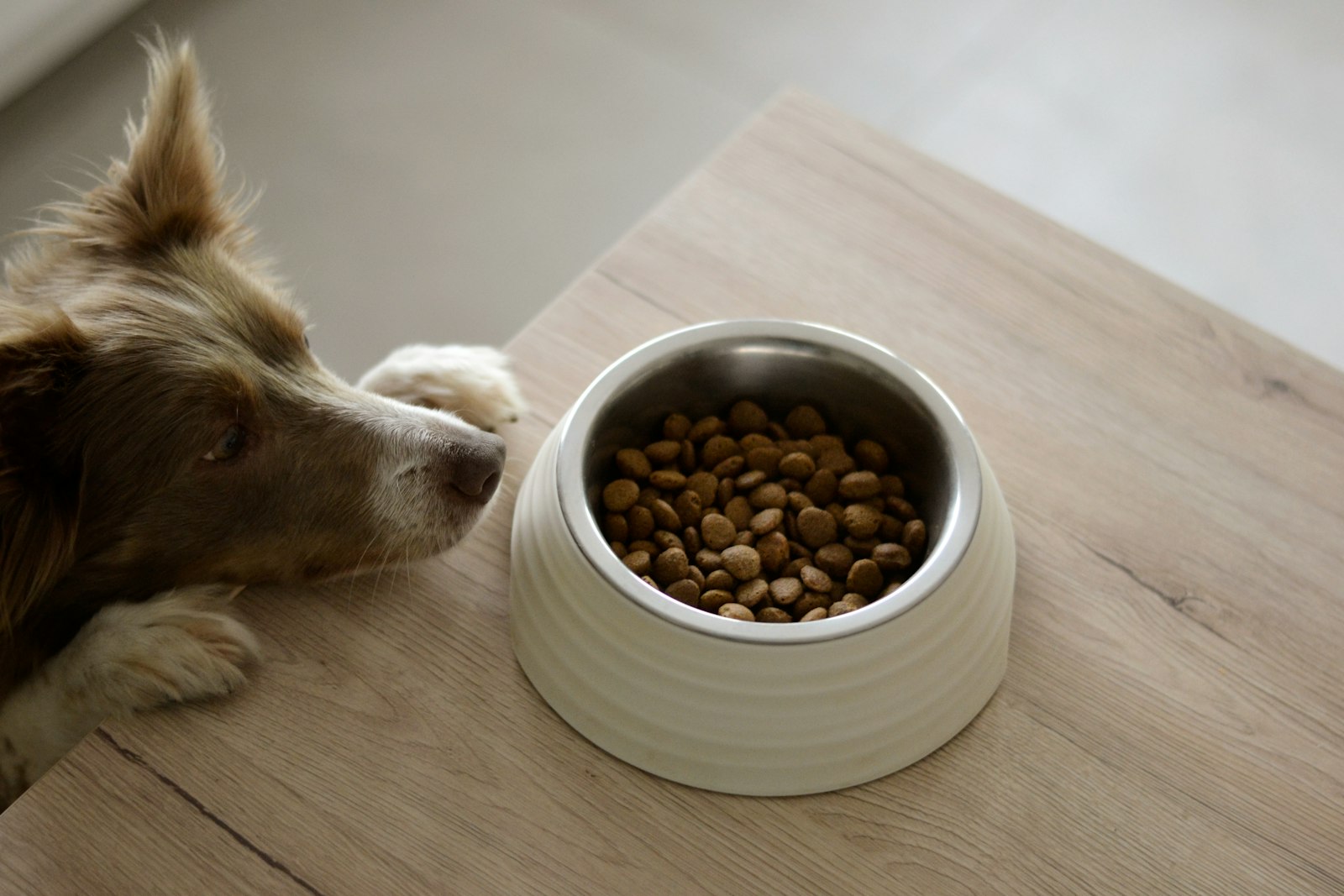
Cover context: A dog eating food out of a bowl. Photo: Unsplash. Editorial illustration only; no relationship to a real client, brand or TUSKO order is implied.
Quick answer: Buyers evaluating pet food bowls and feeders manufacturing and export from ASEAN should start with intended use, destination and measurable acceptance criteria. The relevant route is stainless deep drawing and polishing, ceramic forming and glazing, polymer or silicone moulding and assembly. Control stainless bowl inserts, ceramic bodies and glazes, polymer or bamboo-composite stands, silicone non-slip rings and slow-feeder inserts, then verify food-contact suitability, tip and slide resistance, glaze integrity and cleanability with representative finished samples. TUSKO coordinates qualification, samples, order terms and delivery as your single point of contact. This guide is for importers, retailers and private-label brands serving the United States, EU, UK, Canada, Australia and New Zealand. Country of origin alone does not establish quality, compliance or a lower landed cost.
Why evaluate pet food bowls and feeders manufacturing in ASEAN?
ASEAN sourcing can be investigated as part of a diversified purchasing programme, but this is a site-level qualification exercise, not a national ranking. For pet food bowls and feeders, verify which operations the proposed production site actually performs, how incoming materials are identified and how outsourced steps are controlled. Catalogue breadth, an attractive sample and a familiar country label are not evidence that an order will meet the same specification repeatedly.
Separate an existing standard product, a private-label adaptation and a new custom design. A logo change may require artwork approval; changes to geometry, materials or construction can require tooling, fresh trials and renewed safety evidence. Establish ownership and revision control for drawings, references and packaging before comparing proposals. The objective is an order that can be evaluated and repeated, not a broad promise of cheap production.
Product specification and design boundaries
Choose the format before quoting
Separate single bowls, double diners, elevated stands, slow-feeder mazes, travel bowls and gravity feeders. State the target animal and size band, because a bowl for a small cat and a bowl for a large dog have different capacities, diameters, heights and stability needs. Give capacity in millilitres or cups at a defined fill level rather than brim volume. Automatic electronic feeders are outside this guide; adding a motor, timer or app changes the electrical, radio and battery assessment.
Define the bowl material system
For stainless steel, record the grade, gauge, forming method and polish, and whether the rim is rolled or cut. For ceramic and stoneware, identify the clay body, glaze and decoration, and whether any decal sits in the food zone. For polymers and silicone, specify the resin and colourant. Pet food bowls are not human tableware, but buyers and many retailers still expect food-contact-grade materials; agree the evidence required for each surface that touches food or water.
Control stability and base design
Pets push, lick and nose bowls across floors. Specify a non-slip base ring or weighted body, the floor surfaces for testing, and whether the bowl must resist tipping when a paw lands on the rim. Elevated stands need fixed height options, a stable footprint and inserts that do not pop out. Removable silicone rings must be retained well enough to survive dishwashing without loss.
Make slow-feeder and cleaning claims honest
Slow-feeder patterns should be tested with the actual kibble sizes and wet food intended, and the claim stated as reduced eating speed under defined conditions rather than a health outcome. Narrow channels trap food residue; confirm brush access and dishwasher behaviour. Health or veterinary claims require separate substantiation and are best avoided on packaging unless properly supported.
RFQ checklist: make proposals comparable
Prepare a versioned brief for pet food bowls and feeders that includes the intended user, sales markets, construction, dimensions, materials and supported claims. Attach drawings where necessary and distinguish critical functions from appearance preferences. Include order quantity by SKU, colour or size assortment, packaging format, receiving location and target timing. If a benchmark product is supplied, specify which features are required; copying an appearance does not establish permission to reproduce protected designs or claims.
Ask TUSKO to coordinate a proposal against the same brief and list any proposed deviations before sample approval. Record material substitutions, tolerances, test scope, artwork and accessory counts explicitly. A price comparison is meaningful only when the constructions, inspection assumptions and shipment terms align. Avoid issuing an order while important requirements remain described as standard, premium or export quality without an agreed reference.
| RFQ area | What to define | Evidence to review |
|---|---|---|
| Product and use | Pet Food Bowls and Feeders: intended users, tasks, destination and design exclusions | Versioned specification and realistic use demonstration |
| Materials and claims | stainless bowl inserts, ceramic bodies and glazes, polymer or bamboo-composite stands, silicone non-slip rings and slow-feeder inserts | Component identification and evidence linked to the finished design |
| Performance | food-contact suitability, tip and slide resistance, glaze integrity and cleanability | Agreed test method, acceptance limits and sample identification |
| Assortment and pack | Quantity by SKU, size, colour, accessories and labelling | Approved artwork, packing map and packed sample |
| Commercial and delivery | Currency, term, receiving point, inclusions and validity | Comparable written proposal and shipment assumptions |
ASEAN country comparison: qualification questions, not promises
The comparison below is a shortlist planning tool. It does not claim that every country or proposed site has the listed operations. Confirm actual equipment, material availability, quality records, capacity and export documentation for the specific product. Use the same evidence checklist in each country; lower freight or a familiar trading route cannot compensate for an unqualified construction.
| Country to evaluate | Qualification question | Evidence before approval |
|---|---|---|
| Thailand | Which forming, finishing and assembly steps occur at the proposed site? | Check tooling condition, process records and final-article evidence. |
| Vietnam | Can the proposed site reproduce the complete specification and assortment? | Review material identification, sampling records and pack control. |
| Malaysia | Are formulation, component and subcontracting changes traceable? | Verify revision controls and destination-relevant technical evidence. |
| Indonesia | Are input sourcing and delivery assumptions documented for this order? | Review origin records, finishing control and a realistic packing trial. |
Mistake 1: Glaze and decoration integrity
⚠️ Risk: Ceramic glazes or decals in the food zone can craze, chip or release substances, and a pretty sample may not reflect production firing.
✅ The Fix: Identify every glaze and decoration in contact with food or water and arrange lead and cadmium release testing on finished production pieces where appropriate. Inspect for crazing after repeated wash and thermal cycles.
Keep this checkpoint in the pet food bowls and feeders approval record, with the method, sample identity, acceptance decision and responsible review captured together. Define how a failure will be investigated and what evidence is needed before release. An inspection result has limited value if the order revision or tested materials cannot be identified.
Mistake 2: Stainless grade and finish
⚠️ Risk: Thin or lower-grade stainless can rust at welds or rolled rims, and a mirror polish can hide pitting.
✅ The Fix: Confirm the grade with material records and a spot check, examine rim and base seams, and run a salt-water or wash-cycle exposure agreed for the programme. Reject sharp edges at the rim.
Keep this checkpoint in the pet food bowls and feeders approval record, with the method, sample identity, acceptance decision and responsible review captured together. Define how a failure will be investigated and what evidence is needed before release. An inspection result has limited value if the order revision or tested materials cannot be identified.
Mistake 3: Tip and slide resistance
⚠️ Risk: A bowl that slides or flips creates mess and returns, especially on tile or wood floors.
✅ The Fix: Test on defined floor surfaces with realistic food loads and lateral push, and verify that non-slip rings stay seated after dishwashing. Record the method so repeat orders use the same test.
Keep this checkpoint in the pet food bowls and feeders approval record, with the method, sample identity, acceptance decision and responsible review captured together. Define how a failure will be investigated and what evidence is needed before release. An inspection result has limited value if the order revision or tested materials cannot be identified.
Mistake 4: Elevated stand stability
⚠️ Risk: Inserts can lift out and stands can rack when a large dog leans on them.
✅ The Fix: Check insert retention, joint rigidity and footprint under a defined load, and confirm fasteners and finishes on wooden or bamboo stands resist moisture.
Keep this checkpoint in the pet food bowls and feeders approval record, with the method, sample identity, acceptance decision and responsible review captured together. Define how a failure will be investigated and what evidence is needed before release. An inspection result has limited value if the order revision or tested materials cannot be identified.
Mistake 5: Mixed assortment packing
⚠️ Risk: Ceramic bowls can chip in transit and multi-size assortments can arrive mixed up.
✅ The Fix: Approve inner dividers or nesting, verify packed counts by size and colour and run a route-representative drop assessment before shipment release.
Keep this checkpoint in the pet food bowls and feeders approval record, with the method, sample identity, acceptance decision and responsible review captured together. Define how a failure will be investigated and what evidence is needed before release. An inspection result has limited value if the order revision or tested materials cannot be identified.
Destination compliance and documentation
Treat pet feeding products as general consumer products with food-contact expectations. In the EU, the General Product Safety Regulation applies to consumer products, and Regulation 1935/2004 is commonly used by buyers as the reference for materials in contact with food, even though pet food contact is a buyer-specified requirement rather than an automatic legal classification in every case. For ceramic bodies, Directive 84/500/EEC on lead and cadmium release and its US counterparts under FDA guidance for ceramicware are useful references. California Proposition 65 warnings may be relevant for US sales depending on substances present.
General consumer safety and traceability should also be reviewed. In the EU, assess the General Product Safety Regulation where applicable, including responsibilities for economic operators and online-offer information. Great Britain and Northern Ireland can follow different regulatory routes. Canada, Australia and New Zealand have their own safety and import obligations. Ordinary non-electrical housewares do not automatically require CE or UKCA marking; use markings only where the applicable legislation requires them.
Keep declarations, laboratory reports, risk assessments, artwork and instructions tied to the actual SKU and revision. Confirm whether any US certificate obligation applies to the specific rules affecting the product; a General Certificate of Conformity is not required merely because an item is imported. Have qualified specialists review current obligations before order approval. This guide is practical procurement guidance, not legal advice or a promise of regulatory clearance.
Sampling, production release and change control
Use samples to answer defined questions about food-contact suitability, tip and slide resistance, glaze integrity and cleanability, not simply to choose a colour. Review the sample against drawings, material identification, user handling and packing. Document deviations and decide which ones must be corrected before production. A prototype made by a different process may be useful for geometry but cannot prove that the production method will produce the same performance.
Distinguish sample approval from ongoing process control. Agree production checks and a risk-based inspection plan suited to the actual defects, lot and distribution route. Any use of an acceptance-sampling standard must state the sampling plan and defect classifications; a general AQL label is not a product safety guarantee. Critical hazards require their own controls and should not be treated as ordinary appearance variation.
Require review before substitutions to materials, formulation, coating, hardware, print or subcontracted operations. A visually similar alternative can change function and invalidate earlier evidence. Preserve the approved bill of materials, drawings and test scope for repeat orders. Review receiving damage and customer returns by failure mode so corrective actions address the cause rather than simply replacing individual units.
Landed cost, export origin and packing
Compare pet food bowls and feeders proposals using the same construction, approved claims, packaging and assortment. State currency, shipping term, receiving point, validity and what is included in the commercial proposal. Consider freight, duties, clearance, insurance where relevant and destination handling assumptions. TUSKO coordinates one proposal with clear inclusions; a lower unit price does not establish a lower delivered cost if the designs or shipping assumptions differ.
Measure carton dimensions and weight from the actual packed product. Nesting, projecting parts, surface protection and accessory restraints can materially change usable shipment capacity and damage risk. A carton suitable for consolidated ocean freight may not be suitable for parcel delivery. Agree a route-representative transport assessment and check product condition, labels and quantities after unpacking.
Confirm tariff classification with a qualified customs adviser for the actual construction and set configuration. Shipment from ASEAN does not automatically establish preferential origin or zero duty. Review the applicable agreement, product-specific origin rules, processing and supporting records. Treat wood packaging, product biosecurity and customs origin as distinct questions. There is no universal category MOQ, lead time or guaranteed saving: tooling, materials, assortment, testing and production scheduling determine order-specific assumptions.
Frequently Asked Questions
Do pet food bowls legally need food-contact testing?
It depends on the market and the retailer. Many buyers specify food-contact-grade materials and testing as a commercial requirement. Agree the evidence you need for each material before ordering rather than assuming a single legal rule.
Is stainless steel always the best pet bowl material?
Not always. Stainless resists breakage and is easy to sanitise, ceramic offers weight and stability, and silicone suits travel. The right choice depends on the animal, use and price point; the finished construction must still be verified.
Can slow-feeder bowls make health claims?
Keep claims to observable function, such as slowing eating under defined conditions. Health or veterinary claims need separate substantiation and may be restricted by retailers and regulators.
How do I start a pet food bowls and feeders sourcing project with TUSKO?
Send the intended use, construction, capacities or dimensions, quantity by SKU, sales market, packaging and receiving location. TUSKO coordinates qualification, samples and a comparable commercial proposal through one point of contact. Reply within 12-24 hours.
Does manufacturing in ASEAN guarantee lower import duty?
No. Duty treatment depends on classification, actual origin, the applicable trade agreement and supporting evidence. The dispatch port alone does not establish preferential eligibility.
What controls lead times and minimum orders for pet food bowls and feeders?
Material availability, design changes, tooling, testing, colour or size assortment, packing and production schedule. Ask for order-specific assumptions after the brief is defined rather than relying on a universal category estimate.
Sources and scope
Official starting points: EU food-contact framework; EU General Product Safety Regulation; FDA guidance on lead in ceramicware; California Proposition 65; Australian product safety guidance. These references support a current regulatory review, not a claim that any particular production site has been qualified. The QC checks here are suggested procurement controls, not invented legal thresholds. Confirm scope, dates and destination requirements for the actual product before ordering.
Related sourcing resources
Compare another common category: Kitchen Cooking Tongs manufacturing and export from ASEAN. Compare landed-cost assumptions, explore ASEAN product options or review the TUSKO sourcing process.
Work with TUSKO
Send TUSKO your pet food bowls and feeders brief and benchmark. We coordinate production qualification, sample review, order requirements, quality controls and delivery through one point of contact. Start with the defined product and destination so the next step is a sourcing plan and commercial proposal based on approved requirements.
WhatsApp Business: @tuskoconsulting — contact TUSKO by WhatsApp or email
Email: contact@tuskoconsulting.com
Reply within 12-24 hours.